Filed under: Analysis / Opinion, Odds and ends, Found Footage
Graphical software licenses: a good idea?
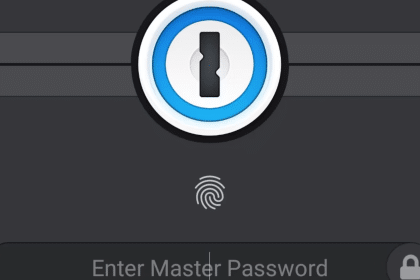
Over at the Switcher's Blog (which is actually the blog for browser form manger 1Passwd) they're crowing about their new innovation: software License Cards. These are basically just graphic files that contain the registration information embedded in them. These "cards" are emailed to customers, and the registration is achieved by dragging and dropping the card on the application. They claim these cards are much more Mac-like than the standard method of a hex code.
While there's something to that, I don't like this idea as a complete replacement for registration codes for one simple reason: it requires me to keep these card files. With text registration codes it's very easy to keep a list of them in a plaintext file. For instance when I register software I immediately add the new code to my local registration text file, then I email it, as plain text, to myself for backup. I realize that I could email myself these cards as attachments, but it just adds an extra layer of complexity. If every developer used these things, I'd quickly end up with a ridiculous collection of these cards. Further, as some have pointed out, this also precludes printing out and keeping a hard copy of the codes. (All these points apply as well to the related practice of program specific binary keys such as used by Pukka and Overflow).
So I have a simple suggestion. Why not use both? In fact, the hex code could be "printed" on the face card itself. That way old curmudgeons like me could keep doing it the old way, but whatever putative benefits these cards offer would still be there. So what do you think? Do you like the idea of License Cards?
[Via Digg]

Reader Comments (Page 1 of 2)
Travis L. said 7:52PM on 4-08-2007
I think it's a really cool idea, but Google will make it kind of easy to find these types keys. There will always be the person who for whatever reason puts the key into a folder with no index file or renaming it.
Reply
Steve Jobs said 8:28PM on 4-08-2007
FYI Yummy Soup is another app that uses this scheme.
My question is, how are these files made? What kind of files are they? What can you open them with?
I tend to agree about being able to print off a hard copy, although I don't mind this method either. I guess I could go either way.
Reply
jailerjoe said 8:32PM on 4-08-2007
Hmmm... Not sure how I became Steve Jobs, but that's okay. Least I got lots of dough and black turtlenecks.
Reply
Brian said 8:33PM on 4-08-2007
I agree 100% - we need a text way to save these registration codes. I keep a list of them, and I also fwd them to my email account I keep for receipts and such. There's nothing hard about copying & pasting a string of text - every word processor user can handle this task.
If a developer moves to the image based registration card, I hope they keep a backwards-compatible option for text-based keys also.
Reply
Brock Batsell said 8:37PM on 4-08-2007
To answer "Steve"'s question, the license information, in XML format, is appended to the binary information in the JPEG file. So, technically, you can just pop the license file into Hex Fiend or even TextEdit and copy the XML to a text file. You could then drop onto the end of any JPG file if you wanted to register. Cumbersome, but the "image" isn't actually the key, it's just the vehicle.
Reply
Josh Pyles said 9:14PM on 4-08-2007
No, this idea is bad. Panic has a much better idea. When you buy Transmit, it uses a link to submit the serial number to the program so that you don't even have to type it in, but if you bought a hard copy of the program, you can still type the number, or print it, whatever
Reply
Jeffrey Bergier said 9:22PM on 4-08-2007
I think these are a great idea. the point of having the hex code and the images doesn't work because the whole point of them is the software reads every pixel of the image to determine if it is genuine. that barcode is completely unneccesary. This also makes it harder to to share because it has personal info on it and you can't just cover it up because the image has to be exactly the same. And the "hardship" of backing it up is bogus. Make a freaking album in iPhoto DONE! that simple. Back that up however you want.
Reply
Ralph Daily said 9:41PM on 4-08-2007
I used the graphic license for 1passwd and it went fine. I think you can get a replacement sent to your registration email address in case you lose it. A hex code is easier to keep up with but I can see how the graphic file is better protection for the developer. It's ok with me. It's not a big deal. It's less of a hassle than the dongle Apple makes me use for Logic Pro.
Reply
David Teare said 10:11PM on 4-08-2007
Thanks for the great discussion!
These graphical License Cards will take some time to perfect, but IMO it provides something more tangible than a hexcode. It is hard to say something is "tangible" when you can't touch it, so put another way, a graphic Card feels more "natural". A Digg comment said it best: Entering a hexcode is an unnatural act.
We plan on adding the ability to extract the XML string so those that feel comfortable with that approach can use it.
As for the comment re: Panic's registration URL, this is indeed a wonderful idea. We used to do that too, but it was confusing to a large subset of users. We had many CS questions originating from out-of-sync Launch Services databases, failing to install 1Passwd first, and *many* people assumed it was a typo and copied it into a browser with the http:// prefix.
Cheers!
Dave Teare
Co-author of 1Passwd
Reply
Justin Miller said 10:16PM on 4-08-2007
Hi, I'm the developer of the aforementioned Pukka. I and many other developers use an open source framework called AquaticPrime for license generation. While it's true that the registration files are actual files and not codes, the files are actually a simple XML format that you can open with TextEdit or another text editor if you like. AP encourages developers to create license files for each application or set of applications, so in my case, I've made .pukkalicense files that Pukka knows how to open natively when they are clicked on. Also, in my specific setup, once applied, the license file is not actually needed and the registration info is backed up in the application's preferences. Hope this clears up a bit of the mystery behind the files.
Reply
alej744 said 11:29PM on 4-08-2007
Please tell me what the golden Safari icon in the dock is!!! Please
Reply
Travis L. said 11:48PM on 4-08-2007
It's the golden ticket to the Wonka Factory. Heh. It's a WebKit nightly build. http://nightly.webkit.org
Reply
wako said 12:06AM on 4-09-2007
awesome...
cant wait till i see product keys posted on flickr sites ;)
Reply
artifex said 1:23AM on 4-09-2007
I think of all these registration processes as additional encumberances to a software package. I can understand a desire to recover expenses and make money, sure. But It seems like it's becoming more complicated, and I wonder how disabled people, say blind people, deal with some of these.
I guess if these pictures are decoded directly by the programs they belong to, they're not different from generic license files. But if anything visible in the pictures is required, well, that causes a problem.
Reply
nezromatron said 2:17AM on 4-09-2007
So.. Developers have that much free time that they are wasting energy on this crap? How often do you register a program? Once, and then you move on. What's the point of complicating the process?
Reply
Alex Kadis said 3:33AM on 4-09-2007
I think that the idea of graphical registration is a terrible idea. Granted it may seem more intuitive to beginners, but how hard is it to tell them to "copy and paste the following code into the registration dialog" ? I use the password manager info.xhead, and I back up all of them in paper form. An image makes these tasks impossible. I like the ability to just copy and paste some code into a window. I mean how often does a user even need to do it? Especially for beginners: I tend to set up all applications for the computer-illiterate among my family and friends. It's a system designed for the wrong type of people IMO. Why fix something if it isn't broken?
My favorite approach is how NetNewsWire does it. It uses your web-based account (username and password). Grabs the registration information from their servers, verifies it and you're good to go. It may not be practical for every application, but hell, it's a GREAT system.
The geek in me dreams of a registration system based on OpenID log in, use your OpenID for any app registration and you're good to go. No thought needed. Oh well, one can dream.
Reply
Mo said 3:50AM on 4-09-2007
The problem with system that require you to log on and connect to a web server is that they stop working when your computer is without Internet access (and when's that absolutely most likely to be? when you've just reinstalled it and are in the process of putting all the software back on from your backup DVDs).
Worse than that, though: if the company goes out of business, gets into a fight with its hosting company, or its domain gets hijacked, you're stuffed.
Reply
Alex said 4:01AM on 4-09-2007
Mo, good point, never thought about that. I still don't like the idea of graphical registration though.
Reply
Diederik Hoogenboom said 4:42AM on 4-09-2007
I don't see how this would make things much easier for the user compared to just sending the same XML registration data
as a file by mail and enabling the registration by double-clicking. However, it sure does look fancy and from a marketing point of view I can see the benefits.
Reply
Mark (UK) said 6:25AM on 4-09-2007
License "files" have been in the industry for years. They are a perfectly good way to activate a product. As long as the files are unique to the user and have suitable ant-tampering measures they can work well for an app developer. They will be easy to backup and store and there should be no reason to be on-line to license a product.
My only concern is that they should be of a standard format, look and feel as well as the internal layout. Currently I have a dozen licensed apps each with a different licensing model. This method could be the best way to sort out that mess.
Reply