Skip to Content

MacTech 2010: Andy Ihnatko on the coming of Lion

Commentator Andy Ihnatko took the stage at this week's MacTech conference here in Los Angeles today to give the conference keynote. In his talk, Ihnatko spoke about the upcoming new version of OS X, Lion, and specifically three different features of it.

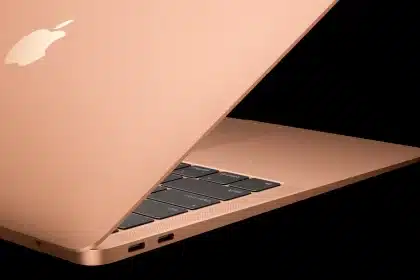
First, he talked about the Mac App Store, and what he thought would be the outcome of Apple bringing an App Store system to its desktop platform. Then, he spoke about what he called "unitasking," and how focusing on just one task at a time both changes the way computers work and the way we do, and finally he mentioned Apple's changing hardware, and how the new MacBook Air embodies Apple's ongoing curve in hardware creation and production.

First up was Ihnatko's opinion on the Mac App Store so far, and he said that though he'd been "trying to get upset about it," he actually liked the idea. "The good news," he said, is that "Apple really doesn't care about" developers. Instead, it cares about users, and from users' point of view, the Mac App Store is actually a great idea. Though developers may have issues with it, Ihnatko said that anything that allows more than the around 200,000 (he estimated) Mac users out of 40 million to actually purchase and use apps will end up being a good thing.


All of that said, Ihnatko admits that there will probably be issues with the Mac App Store -- he said that if the iOS App Store is any indication, he expects three months of messy apps, six months of good innovation, and then about three more months for Apple to figure out just how to guide and regulate app releases after that. "Provisionally," Ihnatko concluded, "the Mac App Store is not evil."

Secondly, Ihnatko talked at length about what he called "unitasking" -- the drive towards a "full-screen mode" that Apple seems to be headed towards in the current implementations of iOS and beyond into Lion. He said that computers traditionally are actually designed against the way our brains work. We're distraction oriented -- while our minds can figure out very complex problems with solid attention, we're also very tuned into distractions, to the point where even a little stimulus can wreck our productivity. Ihnatko said plainly that "multitasking is 95% a lie" -- you may think that you can do more than one thing at a time, but science has said that you can not. Eventually, something will give somewhere.

Thus, Ihnatko actually appreciates unitasking -- he said he already uses his iPad for concentrated writing, and showed off Plaintext as an example of an app that allows him to focus on writing with little to no distraction. Scrivener also has a "fullscreen" mode that targets just one function as cleanly and as well as possible. And that's the big deal here, said Ihnatko -- when software is used one app at a time (as it is on iOS and will likely soon be on OS X), it cuts right to the heart of what the purpose of the app is. A great app should "tell a story with a screenshot," said Ihnatko. If you can't figure out what an app does just by looking at one screen of it, then perhaps it isn't focused enough to work as well as it should.

Finally, Ihnatko talked about how Lion will embrace the hardware changes Apple has brought to the computing ecosystem since the introduction of the iPad and the iPhone. Hardware is shrinking and changing all the time, said Ihnatko, and one of Apple's big strengths is that it never holds on to hardware that it doesn't need to. At the same time, "openness," said Ihnatko, "is not a feature" -- while there may be complaints about Apple locking down a system like the App Store, Ihnatko compared it to Walt Disney's theme parks.

Disney wanted to make sure park visitors didn't have a bad time when they showed up to the parks, so instead, he went over the line and didn't give them permission to have a bad time. In the same way, Apple is locking away and removing any parts of the computer that might cause problems in any way. Traditional users might be disappointed to lose that control, but users in general appreciate just not having to worry about settings that seem to only harm them when wrong.

Ihnatko's talk was quite interesting -- in a short Q&A after the speech, even he admitted that he hadn't seen much of the Mac App Store, and in fact, only a very small number of people in the world actually have. But he shared enthusiasm about Lion and what it can do in the future -- like the rest of us, he'll be waiting to see what the next iteration of OS X brings to Apple computers.

TUAW is a media sponsor of the MacTech Conference 2010.


Categories

Mac OS X

Commentator Andy Ihnatko took the stage at this week's MacTech conference here in Los Angeles today to give the conference keynote. In his...
 

Add a Comment

*0 / 3000 Character Maximum Comment Moderation Enabled. Your comment will appear after it is cleared by an editor.

23 Comments

Filter by:
Rick

When OS X first came out, Apple tried to change the desktop metaphor and removed the hard drive from it. I believe the idea was for applications to manage their own data. People howled, so they put it back to the way it used to be (and is, now). However, on the iPhone and the iPad, it seems Apple is getting their way.

Anyone want to bet that as more people become accustomed to how the iOS works, that it will work its way onto desktops and laptops?

November 05 2010 at 1:27 PM Report abuse rate up rate down Reply
kaslings

"Apple is locking away and removing any parts of the computer that might cause problems in any way"

So does that mean they'll have to remove iMac's display (yellow) macbook Air displays (color fading), iPhoto, iTunes, MacPro Nvidia cards, iPhone's cellular radio, iPhone 3's processor, etc....?

November 04 2010 at 12:21 PM Report abuse rate up rate down Reply
richkoster

Disney Parks And Apple Products Are Designed With Similar User Experiences In Mind 
http://disneyecho.wordpress.com/2010/11/04/disney-parks-and-apple-products-are-similar/

November 04 2010 at 2:37 AM Report abuse rate up rate down Reply
Rego

"What Apple does not want is a situation where certain apps become so big and well-known that they eclipse Apple."

Give me a break, there is no app that eclipses Apple!

November 04 2010 at 2:17 AM Report abuse rate up rate down Reply
2 replies to Rego's comment
gamba

True, but imagine if suddenly there is no, for example, Adobe CS for Mac at all. Do you really think that people whose business is graphics/dtp oriented could stay on Mac?
I work with graphics and I'm pretty much aware of what's available but since Adobe acquired Macromedia there is no good decent 'other choice'.
So if I want to keep working what I do now . .

November 04 2010 at 3:44 AM Report abuse rate up rate down Reply
Rego

@gamba

That wasn't the point being addressed. To eclipse would be to in effect supersede, and surpass and/or prevent the light from Apple's light to shine. I repeat there is no app that will or could eclipses Apple in the near future!

Your point is in a way a red herring. My response to the comment related to apps in the Mac App Store.

Adobe could stop developing PS for the Mac without ever being in the Mac App Store. Your speculation has nothing to do with the point I was making. If Adobe stopped developing for the Mac it would shoot itself in the foot, which it has a right to do. Even if it did stop developing for the Mac; neither Adobe nor PS would eclipse Apple.

I understand that you feel that PSCS is important to your work and I don't take issue with that.

I would however, point out to you and others, that there are a number of other art and graphics programs that many would find useful and in some cases better than PSCS.

Hopefully the Mac App Store will soon shine the light on all the other art and graphics apps available. It also provides an opportunity for Adobe competitors to display great apps and gain recognition and sales.

If Adobe stopped developing for the Mac it would provide a great opportunity for these other developers to fill the void.

November 04 2010 at 4:23 AM Report abuse rate up rate down Reply
Sprezzatura

Apple absolutely wants to support developers - of a certain type.

What Apple does not want is a situation where certain apps become so big and well-known that they eclipse Apple. In Apple's view of the world, developers should quietly toil away making small, lightweight, low-cost "throwaway" apps. But there's a catch.

Any developer who makes an app that becomes more critical then the OS itself ( think, Office, Photoshop, heck even WoW ) upsets the balance of power and gets between the user and Apple. That developer is now a threat to Apple and Apple will not be so friendly to them.

Several of Apple's new rules are clearly aimed at making sure that app branding can only go so far. "No splash screens" for example - that's about reducing the developer's chance for building a brand in the mind of the user. "No icon on the Dock" - again, this is about power and mindshare of the app vs Apple. The app can never be seen as an equal player.

So if you're a developer and you don't mind being a digital sharecropper in Apple's field, Apple wants you. If you're good, you can make a decent living doing it. But if you're too good -- watch your back. And make sure you can port to other platforms.

Don't say you weren't warned.

November 03 2010 at 11:10 PM Report abuse rate up rate down Reply
1 reply to Sprezzatura's comment
tony d

"no icon in the dock" I'm not familiar with the Mac App Store rules but that sounds kind of silly. What the hell is the dock for then?

November 04 2010 at 3:52 PM Report abuse rate up rate down Reply
dswift

Do we have yet another name for -- and another stab at -- OpenDoc?

November 03 2010 at 10:48 PM Report abuse rate up rate down Reply
JiN

Here is what I don't see anywhere in Apple's statement. The Mac App Store will not be the only means to get software on your Mac. Those rules only apply to developers who want to get their app in the Mac App Store (Note worst rules exists for brick & mortar stores).

So when it's time for me to purchase my next Text Editor I will not go to the Mac App Store but to either Bare Bones or Macromates. Or maybe find it in a Mac Bundle. But my aunt will go straight to Mac App Store and if it doesn't exists there then it doesn't exists. The only developers that should be worried about this are the ones the provide their own Pseudo-OS with their apps like MS and Adobe. They will probably fall in line by releasing a non-pro version via the App Store.

Finally, know what piece of Apple software will not be available on Mac App Store? XCode and without that then there is no Apps for the store.

Let me make up a big conspiracy theory right now...

"Apple is working on a light version of OS X Lion with a higher price developer version for developers and enterprises, don't believe me look at the many versions of Windows 7! Spread this lie around and let's take down Big Brother!"

November 03 2010 at 10:29 PM Report abuse rate up rate down Reply
2 replies to JiN's comment
Dick Applebaum

Help! The paranoids are after me!

November 04 2010 at 12:38 AM Report abuse rate up rate down Reply
mikehild

"Finally, know what piece of Apple software will not be available on Mac App Store? XCode and without that then there is no Apps for the store."

How do you know that? And why on earth would not having XCode available in the App Store mean, "no apps for the store?"

Besides, it actually would make sense to not have XCode in the App Store. It's not something the vast majority of Mac users would have any interest in or use for. It's strictly for developers, whether professional or amateur, and those people should have the know-how to be able to find it themselves from Apple's developer web site. If not... well, they have no business developing apps if they don't even know how to locate and download a development environment.

November 04 2010 at 1:26 AM Report abuse rate up rate down Reply
gormster

"Changes" isn't the same as "doesn't use". They're basically saying no apps that violate HIG, or at least the bits pertaining to the native UI. (if a button doesn't act like a button, for example)

November 03 2010 at 10:14 PM Report abuse rate up rate down Reply
rahsaanmoore

What happens in a few years when the iphone and iPad are just as powerful as the low end mac book? This bodes well for apple for the next decades of personal computer

November 03 2010 at 9:06 PM Report abuse rate up rate down Reply
Stan

I'm sorry, but he is completely off base with the Mac App Store.

The App Store's *only* purpose is to attract new developers to the Mac platform, and to spur new software development on the Mac, just like it did so phenomenally well for the iPhone. Its success will be measured in how much new Mac app development it ignites.

To suggest that the App Store is anti-developer is just utterly preposterous and is completely ignorant of just what happened with the iPhone App Store.

It's very, very simple. How could someone get it so wrong?

November 03 2010 at 8:35 PM Report abuse rate up rate down Reply
5 replies to Stan's comment
Buy an ad here

Tweets

© 2012 AOL Inc. All Rights Reserved.