Skip to Content

Xserve End Of Life: Some opinions and ideas about Apple's server strategy

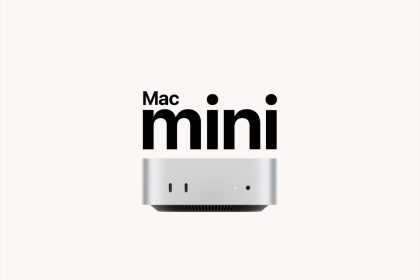
As an Apple Consultants Network member who has installed his share of Apple Xserves, I have mixed emotions about Apple's decision today to pull the plug on the only "real" server that they've been selling. On the one hand, Apple hasn't been selling a lot of the pricey pizza boxes to big business, so it makes sense that Apple would simply re-purpose existing products -- the Mac mini and Mac Pro -- as servers. On the other hand, I think it sends mixed signals to the enterprise market about Apple's commitment to business.

Apple Senior World Product Marketing Manager Eric Zelenka stated in a post to the Xsanity forums that Apple is still committed to the server products, technologies, and devices, and that the decision to kill the Xserve has no impact on future Xsan or Mac OS X Server development. I'm wondering if that's just a lot of marketing-speak to try to calm down admins who have a huge investment in Mac OS X Server, Xsan, and Xserves. According to our own Victor Agreda, who is at MacTech 2010 this week, many Mac IT admins feel that the Mac OS X Server flavor of Mac OS X is safe for the time being. I'm not so sure -- read more of my personal thoughts on the next page.


The departure of the Xserve from the Mac server lineup got me thinking a bit about the future of the Mac OS X Server software. In the past, pre-announcements of Mac OS X updates also meant that the Apple website was updated with statements about new features in Mac OS X Server. This was true for both Mac OS X Server 10.5 and 10.6. With the recent announcement about Mac OS X 10.7 Lion, there was no corresponding site update touting the upcoming features of the server version of the OS. Perhaps the OS X Server team just hasn't made their plans public, or maybe there are no awe-inspiring new features, but it is surprising that Apple didn't at least make a nod in the direction of the server OS.

Could Apple be tossing Mac OS X Server out the door in the future? Perhaps. In an IDC survey of market share of server operating systems published earlier this year, Windows Server operating systems had about a 75 percent share by units installed, Linux about 21 percent, and Unix operating systems (including Mac OS X Server) a measly 4 percent. When you consider that the Unix OS picture includes Oracle/Sun's Solaris, which is still popular with some organizations, Mac OS X Server probably doesn't account for much in terms of the server OS picture. As such, it can't be adding that much to Apple's bottom line, either.

Perhaps, in the interest of only having to support one operating system, Apple might be considering making the server administration pieces and background processes of Mac OS X Server an "add-on app" to Mac OS X 10.7. In other words, if someone wanted to turn a Mac Pro into a server, they'd purchase apps from the upcoming Mac App Store that would add the functionality of Mac OS X Server to Lion.

Let's say that a company wants file and print services, but doesn't want to worry about mail, web server, wiki server, calendar server or any of those other services -- they could purchase a "file and print services" app and a "user administration" app and add it to the base Lion install. If they later decide to let the server provide additional services, say email and web services, the company could buy those apps and run them on the server. It's an intriguing idea, and one that could make Mac servers even more attractive and affordable to small business. Most of Mac OS X Server's raw functionality comes from the open source underpinnings of OS X and the Unix-oriented server applications it supports (Apache, Samba, Jabber/XMPP, etc.). Breaking those into install-on-demand packages, with official Apple support and maintenance, might even get more Mac servers into the field.

Some other thoughts:

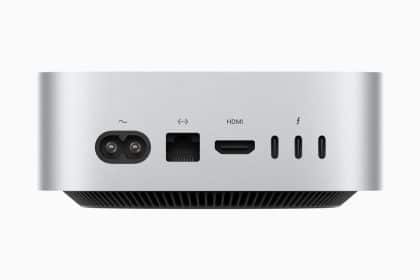
  • Apple's decision on the Xserve does seem to highlight the company's commitment to small businesses, most of whom can afford a Mac mini server to handle file, print, web, mail, calendaring, and other services.
  • Enterprises are not going to shell out for either the Mac mini server, which doesn't have the "horsepower" to power enterprise apps for thousands of people, nor are they going to want to fill server rooms with Mac Pro boxes. The Xserve was the only standard 1U rack mount device made by Apple. Sure, you can purchase rack mounts for Mac minis, but as I just said, they're not powerful enough for enterprise use. This suggests to me that Apple is abandoning the server side of enterprise business and just concentrating on small business. That's not necessarily a bad idea, as there are a lot more small businesses than massive enterprises.
  • The road ahead for Apple's Xsan product line (storage area networking over Fibre Channel for video editing and other collaborative applications that need top transfer speeds) is a little bit murky. Although Zelenka's comment noted above gives some hope to Xsan installs, the lack of a rack-mount server option from Apple is going to complicate matters quite a bit. Xsan deployments need Mac OS X Server to control metadata on the massive RAID arrays that make up the SAN storage pool, and the density requirements of most server rooms will not lend themselves to replacing the existing boxes with Mac Pros when the time comes; the Mac mini, with no expansion slot to add an FC card, is not an option. Other SAN solutions qualified for Final Cut Pro use are available (like Quantum's StorNext), but they're more expensive to deploy and maintain than Xsan is. Keep an eye on the Xsanity forums and the Macenterprise.org mailing list over the next few weeks if you want to follow the conversations and options for this sector.
  • Mac OS X has always been the red-haired stepchild in enterprises, mainly because Apple hasn't (in my opinion) done enough to make the OS a good player in Windows networks. Despite Apple's assertion that OS X works well in any environment, there have been issues with binding Macs to Windows Active Directory. Things have improved with Mac OS X 10.5 and 10.6, but many admins have found enough issues with Apple's way of doing this that they are forced to resort to third-party solutions such as Thursby Software's ADmit Mac. Perhaps Apple should concede the server OS market and just concentrate on making sure that Mac OS X 10.7 can be a completely equal client in the dominant Windows environment in the enterprise market.
  • Server In The Clouds: Could Apple be looking at providing cloud services for companies? Once again, this is in line with some of the strategic moves that Apple is making. Imagine if a business could rely on Apple to provide file, web, wiki, calendar, mail, and other services for a low monthly fee, through some sort of "virtual server" service. There's no upfront cost for hardware, backups are done off-site by Apple, and there's a 24/7/365 team of experts making sure that the "server" doesn't go down. Apple's making that big investment in the new North Carolina data center for some reason, and perhaps a future "server in the clouds" service could be part of the reason that facility is being built.

As I noted earlier, these are just some thoughts that were bouncing around inside my head today as I thought about my experiences with Xserves in the past. I'd love to see how other server admins feel about Apple's decision, and what they think might be the future for Mac OS X Server. Leave your comments below.


Categories

OS X

As an Apple Consultants Network member who has installed his share of Apple Xserves, I have mixed emotions about Apple's decision today...
 

Add a Comment

*0 / 3000 Character Maximum Comment Moderation Enabled. Your comment will appear after it is cleared by an editor.

62 Comments

Filter by:
Scott

Apple has been getting away from enterprise for a long time. XServe RAID was slow and outdated the day it debuted - frankly i'm surprised anyone bought the thing in the first place.

The XServe was a decent machine, but suffered from lack of interest (from Apple AND potential buyers).

Mac OS X itself is more interesting - It's half extensions of Apple Software (iCal server, Address Book server, WebObjects, etc) and half implementations of OSS. Using OSS was an easy and inexpensive way to get a server product together, and it wouldn't shock me at all to see Apple drop those components and allow people to install them on their own. MySQL, PHP, Apache all of these have free third party built Mac OS X implementations that are better than Apple's. That would allow Apple to concentrate on (and modularize) it's proprietary apps - a better solution all around.

It's pretty clear that Apple doesn't want to be in the datacenter in any major way - the only role they want their is to directly extend their end user experience. Let everyone else manage the other stuff.


November 12 2010 at 2:54 PM Report abuse rate up rate down Reply
svenwaschbaer

http://www.xserve-petition.com/

November 10 2010 at 11:13 PM Report abuse rate up rate down Reply
malus malum

The Xserve is a bit of a painful form factor. 1U server made sense in a world where ISP's and Co-Lo providers charged by rack space. Those days are largely gone. They now charge by power consumption which ties directly to cooling and delivering high power capacities to individual cabinets. Putting 15,000 va into a rack is incredibly hard to cable, power and cool.

Most places are happy just to give you another cabinet.

The thin long servers just forced everyone to go buy 4 ft deep racks to accommodate all the long servers that jammed up the backs of your cabinets with cables, blocked air flow, and prevented you from shutting the cabinet doors.


I'd be very happy if they modified the Mac Pro a little bit.

The removable XServe drive trays should stay. They are wonderful.

Mounting an XServe requires a traditional cabinet or a 4 poster.
They don't go on a shelf or desk nicely, and they don't fit in a traditional relay rack.

Change the Mac Pro so that you could take the handles off, and attach rack mount ears to it, and mount it sideways in a rack.

A 19" form factor Mac would make an awesome Home Theatre PC, Small Company Server, or desktop machine.

See ATech Fabrications cool cases if you want an idea of what a Mac Pro server could look like.

http://www.atechfabrication.com/products/HeatSync_7000.htm

(No, I don't work for them, I don't even live in the same country. I'm just lusting after a Mac Pro logic board mounted in their HeatSync 7000 Case)

November 09 2010 at 3:52 PM Report abuse rate up rate down Reply
MLaMorte

I don't think the end-of-life date of January 31, 2011, is an accident. It's right after MacWorld.

My guess: Apple decides to license some hardware manufacturer (like HP) to make OS X Server-compliant server hardware, and then Unisys would provide enterprise support the way they're already signed on to provide enterprise support for the iPad. In this scenario, Apple designs the motherboard & other hardware specs but leaves production to someone else. Apple verifies compliance of the finished hardware so everything works 100% with OS X Server. It's a win-win-win: the enterprise can breathe a sigh of relief because they're used to dealing with HP and Unisys anyway; HP and Unisys get more corporate customers; and Apple pushes OS X deeper into the enterprise with minimal effort and commitment of resources.

Everyone forgets that Apple is a *hardware* company and that everything else -- including OS X Server -- exists to sell more Apple hardware. The problem with the XServes is that it was costing Apple too much to support them. By offloading the *server* hardware sales and software support to other companies that are more known and trusted in enterprise circles, it makes it easier for Apple to sell tons more *desktop* hardware to the enterprise. What makes Apple more money: selling (and supporting) 2 Xserves, or selling 200 iMacs to outfit a whole company or department?

November 07 2010 at 11:22 AM Report abuse rate up rate down Reply
1 reply to MLaMorte's comment
Eric

You could be right. But it may be Oracle / Sun providing the hardware and that could explain why Apple is not making its own Java binaries so they could all be provided by Oracle. That would be a huge boost for Mac in the enterprise. Would give huge credibility tot he mac platform as well as an alternative to linux running on Sun hardware. Maybe finally even see ZFS support on the mac.

November 08 2010 at 9:45 AM Report abuse rate up rate down Reply
melmaninga

At first I was a bit shocked, but then my more reasonable daemons prevailed. I don't think Apple is moving away from the enterprise. I think they are moving towards it.

I would hazard to guess that the Xserve and the MacPro have the lowest numbers of all of Apple's form factors. Neither has really changed since their introduction in 2002 and 2003. That's a long time for Apple. The original Xserve was the wedge to enter the enterprise market. In the current market where virtualisation is king and SAN's prevail it's no longer relevant. Mac OS X Server has three major customers: small businesses, enterprises with existing infrastructure, or FCS/XSan customers. The Mac mini server nails the first two,

For the remaining customers the MacPro is not good enough. I bet that an overdue refresh of the form factor is on the way that allows for a vertical or rack-mounted horizontal orientation. It may have options for internals to match the Xserve's credentials. Or following in the footsteps of the MacBook Air, there will be a blade server running on flash memory that will truly be high performance. They've put SSD into every other form factor.

As an Apple consultant, I've noticed Apple lifting their game over the past few years in terms of support and promotion. You don't provide podcasts on server technologies or evolve your branded consultant's network if you are planning on selling just desktops. I think is part of a long term plan to hone their offering as the go "Back to the Mac". Unfortunately for system admins it is part of Apple's DNA to hide the roadmap and have items magically appear on a stage.

Of course I could just be drinking my own Kool-Aid….

November 07 2010 at 1:45 AM Report abuse rate up rate down Reply
MrHatken


What about they keep MacOSX Server and qualify it to run on certain other Intel server hardware? They still charge quite a bit for OSXS so they would still make a good margin.

November 06 2010 at 9:59 PM Report abuse rate up rate down Reply
Keith

While I'm jumping into speculation, I might as well throw this out as well. Apple has already doubled the size of their server farm in N. Carolina before announcing it's role. Suppose that Apple releases a virtual client on iOS, and they host cloud based osx virtual boxes you can access from an iPad. This makes the iPad/iPhone a very portable thin client. I could see a few things coming together to make this happen.

November 06 2010 at 8:55 PM Report abuse rate up rate down Reply
Keith

The only way this move makes sense to me is if 10.7 will become available for virtualization. As a MaxOS Server manager, I think it's very risky for Apple to announce the death of the xserve without a viable high density enterprise option. The only conclusion (guess) I can come up with is that there will be licensing options for running OSX server in a ESX scalable virtual platform, or on other intel hw.

November 06 2010 at 8:48 PM Report abuse rate up rate down Reply
Lazy person

I can see Apple eventually allowing OS X Server in a virtual environment on any x86 server (VmWare ESX..etc) There really is no need for Apple's industrial design when it comes to servers.

November 06 2010 at 7:09 PM Report abuse rate up rate down Reply
1 reply to Lazy person's comment
Michael

I quite agree. I think this is the only move that Apple can make that would make the unceremonious ditching of the xServe palatable.

November 06 2010 at 7:12 PM Report abuse rate up rate down Reply
Michael

Well as far as I am concerned, apple is abandoning all but the smallest business users and home users.
We support many schools, most of which have and need xServes. I dread the idea of running our school systems on MacPros but what other choice will I have?

I too agree that Mac OS X Server is disappointingly buggy, but if Apple stopped spending all their time playing with their shiny iPads and iPhones then they could probably round up most of the bugs and get them into touch.

So, Mac's managed by a Windows Server... I think not. I guess I might as well put my Mac in the bin and go and buy a PC.

November 06 2010 at 7:09 PM Report abuse rate up rate down Reply
3 replies to Michael's comment
Buy an ad here

Tweets

© 2012 AOL Inc. All Rights Reserved.