Skip to Content

Aza Raskin shares Jef Raskin's 1981 memo on the genesis of the Macintosh

jef raskinIf you don't already know Jef Raskin's name, you should spend some time getting to know his work. His son, Aza Raskin, turned out to be a bit of a prodigy, eventually doing important and amazing work at Mozilla in the Labs department. Aza's latest endeavor is a company called Massive Health. His dad, Jef, was a true visionary in user experience and wrote a book called the Humane Interface, a must-read if you design interfaces for human beings. Oh, and Jef is largely credited with this whole "Macintosh" thing, often called the "father" of the Mac, even though he opposed the use of a mouse!

So if you're steeped in Mac lore, it's a wonderful thing to see his son Aza posting Mac origin-story documents with the man's comments inline. Jef was quite opinionated, and it's worth reading comments he added to "Macintosh Project Genesis and History" -- a document he wrote in 1981. Read the story of the document, excerpts and the full thing at Fast Co.Design or check out the full thing with Jef's handwritten notes on the next page (sorry, a Flash embed from Scribd, so it won't work on iOS).

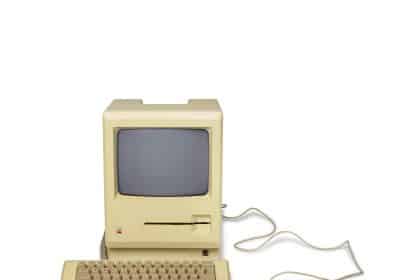
The document makes clear why Apple chose to rigidly control the hardware in the Macintosh platform and sheds some light on key design considerations. The integrated monitor, for example, made it much easier to design a standard user interface, legible fonts and maintain consistency throughout the OS and third-party applications. Aza notes that Android currently suffers from issues similar to those that the Apple II line suffered from then: fragmentation. Although it's weird to think about now, I do remember radical display differences when going from my Apple II to my Laser 128 to my dad's Apple //c. Also, a standard set of hardware made everything from manuals to marketing easier. As the guy behind many manuals at Apple, Jef understood how good that would be. But the marketing? To quote Raskin: "The secret of mass marketing of software is having a very large and extremely uniform hardware/software base." I think anyone can understand how that fits into the current iOS strategy at Apple.

Another notable gem from Raskin's document is this quote, oddly prescient of the iOS apps ecosystem and the use of iPads in education:

"If a truly portable version is produced, then an entire realm of new application areas opens up. As one small example, consider the difficulty of supplying a classroom with conventional personal computers -- the problem of power cords alone is enough to be discouraging, since rooms must be specially prepared to put a computer on each desk. It does not take much imagination to see that a portable computer will open up entire new application areas, and once again give Apple access to totally untapped, yet ripe, market."

Apple's tightly-controlled ecosystem in mobile has no doubt contributed to its success, although we'll never know how much Jef Raskin would agree with details such as the notifications system, using iTunes to sync or other minutia. That's a shame, as Jef had some truly brilliant ideas and contributions. Thank you, Aza, for sharing this with all of us.

Macintosh Project Genesis and History: 1981 Memo


Categories

Apple

If you don't already know Jef Raskin's name, you should spend some time getting to know his work. His son, Aza Raskin, turned out to be a...
 

Add a Comment

*0 / 3000 Character Maximum Comment Moderation Enabled. Your comment will appear after it is cleared by an editor.

9 Comments

Filter by:
k2man

The dates don't jive, this guy wrote the history of macintosh in 1981. Macintosh was launched in 1984. Is this a forgery?

February 14 2011 at 11:06 PM Report abuse rate up rate down Reply
silvalli

Text available in straight HTML here:
http://www.fastcodesign.com/1663212/aza-post

February 14 2011 at 5:54 PM Report abuse rate up rate down Reply
1 reply to silvalli's comment
Victor Agreda, Jr.

Which I linked to IN THE POST:
Read the story of the document, excerpts and the full thing at Fast Co.Design or check out the full thing with Jef's handwritten notes on the next page (sorry, a Flash embed from Scribd so it won't work on iOS).

Link on the Fast Co.Design words. *sigh*

February 14 2011 at 7:28 PM Report abuse rate up rate down Reply
warreno

Humane Interface is a fantastic book. Not only does it offer useful advice on how to design interfaces of all types for all kinds of things, but it gives you the vocabulary to describe why some interfaces really, really suck mule biscuits.

This, however:

"Jef's handwritten notes on the next page (sorry, a Flash embed from Scribd so it won't work on iOS)."

Eye. Row. Knee.

February 14 2011 at 4:54 PM Report abuse rate up rate down Reply
1 reply to warreno's comment
Victor Agreda, Jr.

Unfortunately I did not code Scribd, and we do not control their technology. Flash is still a fact of life on the internet, so the choice was to not include it at all or include it as Flash. Sorry.

February 14 2011 at 7:27 PM Report abuse rate up rate down Reply
mgabrys

Want to know a real-genius that didn't beat his chest on his affiliation with the Mac for the rest of his life but did more to influence it than Jef could ever hope or claim (aside from drafting some of the early architects)?

Alan Kay for the WIN. Suck it bitches.

http://en.wikipedia.org/wiki/Alan_Kay

February 14 2011 at 4:36 PM Report abuse rate up rate down Reply
mgabrys

Appreciate is vison, it just has nothing to do with the Mac (as we know and knew it). That model he's holding is the Canon Cat : http://en.wikipedia.org/wiki/Canon_Cat

That's the computer he envisioned.

Want one? I don't. The hardware and portability is fine - but the GUIos is the thing - and Jeff had diddly-squat to do with that, and he spent the remaining years attempting to keep his name attached to a project that mutated away from him entire. He was a genius on many fronts admittedly - but the Mac isn't one of them. It's akin to Android users who don't see the difference between their off-the-shelf generic phone hardware, and the iPhone.

February 14 2011 at 3:38 PM Report abuse rate up rate down Reply
2 replies to mgabrys's comment
Joshua Ochs

Exactly. Anyone who actually reads up on the history of the Mac knows that he was briefly part of the original project team, but little if anything of his vision actually became part of the Mac or even influenced it. By far his largest contribution was bringing together the talent that DID build the Macintosh - Bill Atkinson, Burrell Smith, and Andy Hertzfeld (among many others).

February 14 2011 at 4:05 PM Report abuse rate up rate down Reply
Victor Agreda, Jr.

Yes, I know that's the Canon Cat. And yes, I know Jef didn't have much to do with the team who built the Mac. Although he taught one of the team members and did play a role in early visions of the system.

I used one of Andy's links in the post, if you'd bother to check it.

February 14 2011 at 4:20 PM Report abuse rate up rate down Reply
Buy an ad here

Tweets

© 2012 AOL Inc. All Rights Reserved.