Skip to Content

Treehouse Labs tracks objects with your iPhone via BiKN

Treehouse Labs was one of a few companies at CES hosted inside the booth of a semiconductor company, because Treehouse is using that company's chips for its own products. Treehouse's main product on display was something called "BiKN" (pronounced "beacon"), which uses relatively tiny RFID tags and near-field communications to track various objects using almost any iOS device.

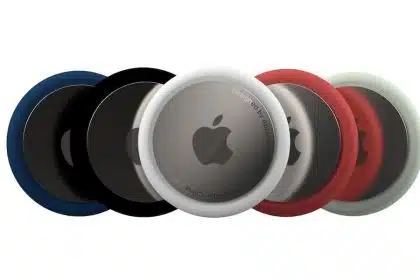
Because the iPhone doesn't have an RFID/NFC reader built in (yet -- someday most mobile devices may include one), you'll need an extra iPhone case that slips around the iPhone and connects to the dock connector. The other side of the system is what's called a "tag," which can be attached to your keys, a child, a pet, or anything else you want to keep track of in local space (within a few hundred feet or so). Put the tag on something, load up a tracking app on the iPhone, and you'll be able to see where the item is or ping one item with a bit of playable audio.

Treehouse will be selling the case for around US$99 sometime next month, and a set of two tags can be purchased for $49. The standard BiKN kit is pretty basic and simply helps you detect and follow tagged items on the iPhone.

Treehouse is looking to license the system to other companies, which means you may see BiKN technology pop up embedded in other gadgets -- possibly the iPhone itself. One of the demos at CES showed a plant that had a tag monitoring its own water level; a separate "gateway" enabled the plant to get more water when the tag said the water level was low. This kind of monitor circuit could be embedded in a device and the iPhone through an app, which means you could set up a pretty simple system of home automation. You could even do things like have multiple tags beep when they go out of range.

The possibilities are fascinating, and Treehouse is working on getting this kind of technology out to anyone who is interested in using or selling it. Our iPhones and iPads are quickly becoming the center of our connected worlds, even at home; Treehouse's system is one of many ways to connect even more items to that network, making it more useful for all of us.


Categories

iPhone iPad iOS

Treehouse Labs was one of a few companies at CES hosted inside the booth of a semiconductor company, because Treehouse is using that...
 

Add a Comment

*0 / 3000 Character Maximum Comment Moderation Enabled. Your comment will appear after it is cleared by an editor.

1 Comment

Filter by:
steve

NFC isn't really useful for this - it has a maximum range of about a foot (and unless they are buried in the couch, even I can see my keys if they are less than a foot away).

RFID using passive tags has the advantage that the tags are (or can be) tiny and very cheap (though usually not both). However, passive tags have quite short range - generally on the same order of magnitude as NFC (which is effectively just a "profile" of RFID). With enough transmit power on the reader, you can get more distance, but there is no way you are going to get within an order of magnitude of "several hundred feet", especially with the power output of a reader embedded in a battery powered cell phone.

RFID active tags could potentially get that sort of distance, but you are now dealing with a larger (because it has an embedded battery and more powerful transmitter and (probably) larger antenna) and much more expensive (due to the above) device.

Treehouse doesn't actually use any of the above - they have a "proprietary" solution based on 802.15.4 (more or less ZigBee - much more functional than active tag RFID, but not compatible), and so even the addition of NFC or RFID hardware to a future phone wouldn't help with this.

With the additional size, constraint of an embedded battery, and especially cost that an active device (needed for the range) requires, it seems to me that a similar product using Bluetooth Low Energy (BT LE or Bluetooth Smart, part of the BT 4.0 spec) would make more sense. A BT LE device can have a range of 100 to (maybe) 200 feet - which seems enough for a "find my keys" application, should eventually (say, next year) be as cheap as (or likely cheaper than, due to more competition on the silicon) an active RFID tag (though not yet, because the silicon just started coming out, so it hasn't started down the cost curve yet), and (big plus in this specific case) the technology (hardware and software) is already embedded in the iPhone 4s (and one assumes future models).

January 17 2012 at 1:35 PM Report abuse rate up rate down Reply
Buy an ad here

Hot Apps on TUAW

Tweets

© 2012 AOL Inc. All Rights Reserved.