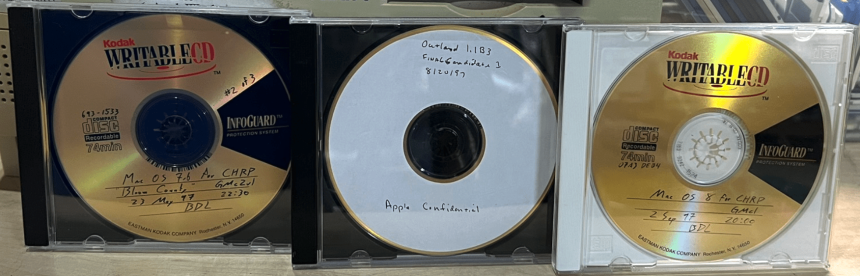
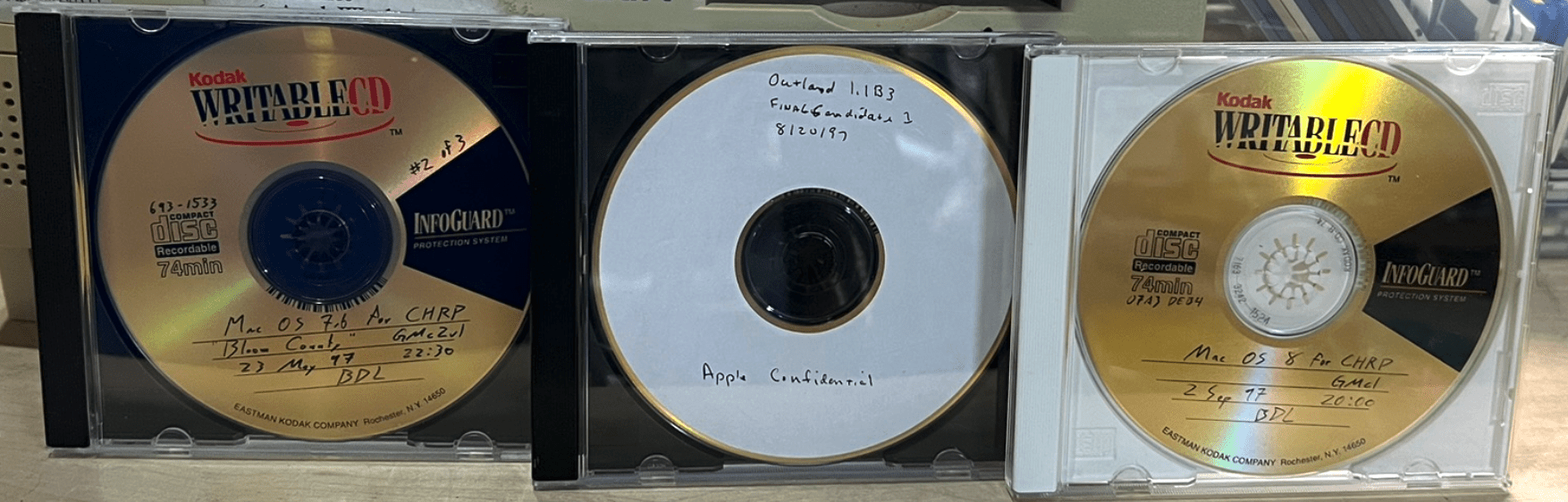
Archivists have uncovered unreleased versions of Mac OS 7.6 and Mac OS 8 designed for the long-abandoned CHRP platform, offering Apple history enthusiasts a chance to explore software that never officially launched. The discovery includes three CD-R discs containing release candidates of the two operating systems and Outland 1.1B, according to details visible in the provided documents.
These discs were sent to software preservation site Macintosh Garden, marking a significant addition to the archive of vintage Apple software. Although Apple collectors often uncover rare hardware, finding new software from this era is unusual. Now, fans of classic Mac systems have rare material to test—provided they can access compatible machines.
CHRP: Apple’s Ambitious but Failed Platform
Created in partnership with IBM, the Common Hardware Reference Platform (CHRP) aimed to unify PowerPC-based systems and allow multiple operating systems to run on shared hardware. The resurfaced discs were built specifically for that experimental platform.
If CHRP had succeeded, macOS might have expanded beyond Apple-made machines. Instead, the project collapsed, partly due to Steve Jobs’ return in 1997 and his decision to shut down the Mac clone program. The disc timestamps—May, August, and September 1997—align with this turning point in Apple’s history.
What’s Inside the Rediscovered Discs
The discs contain more than just system installers. They include:
- Read Me files outlining compatibility
- A Mac OS Licensing extension
- A Tech Note PDF explaining naming standards
- Utilities such as a System Enabler for “newer” hardware
- A NewWorld ROM package
According to the details, the software supports 68k-PPC hybrid systems, meaning users may need emulators unless they own original hardware from the era. At least one user reportedly managed to boot the system on a Mac mini G4—an impressive feat for decades-old code.
A Window Into Apple’s Past
For historians and Mac enthusiasts, these rediscovered operating systems preserve a snapshot of Apple’s turbulent mid-90s transition. They also reveal what might have been if CHRP had lived on.
With these rare builds now available, collectors and archivists gain a fresh opportunity to explore a nearly forgotten chapter in Apple’s software evolution.