
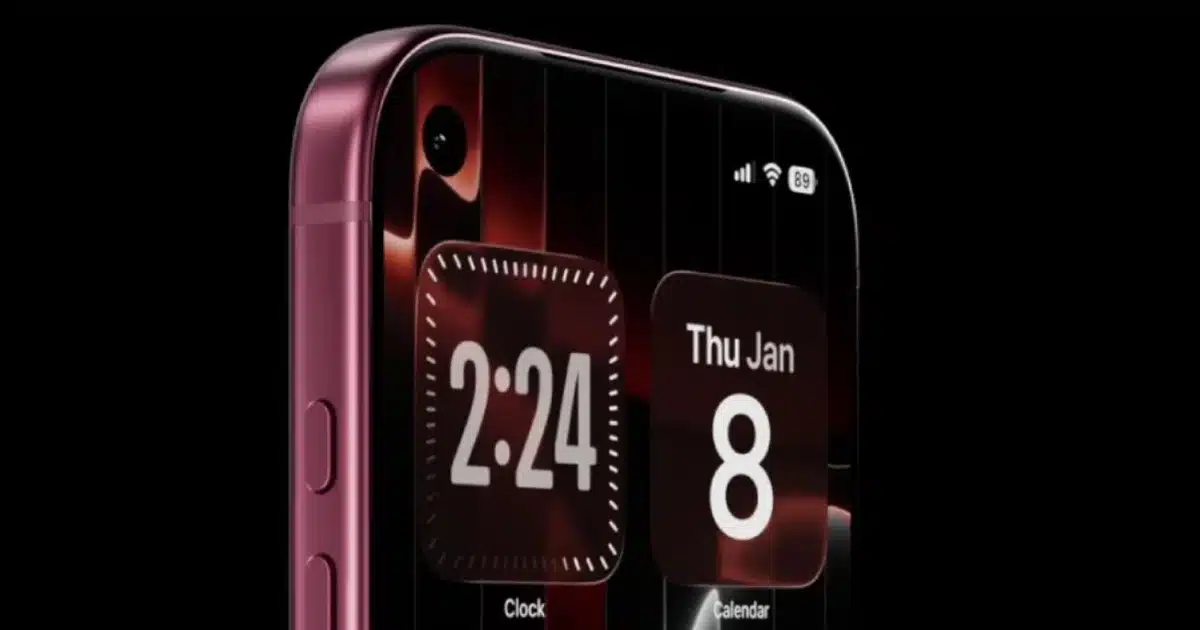
After years of speculation, Apple may finally be laying real groundwork for Face ID without the Dynamic Island. A new industry report says Apple now requires under-display infrared (UDIR) technology for future high-end iPhone OLED panels. This shift could enable major changes as early as the iPhone 18 Pro lineup.
Rather than signaling an immediate redesign, the requirement shows Apple tightening its display standards. The company appears focused on preparing its supply chain for future hardware changes, not rushing unfinished features to market.
What Under-Display Infrared Really Means
Face ID relies on infrared light to map a user’s face in 3D. Today, those sensors sit inside the Dynamic Island. Under-display infrared would move some or all of these components beneath the OLED panel itself.
However, hiding infrared sensors is not simple. OLED displays naturally absorb and scatter infrared light. As a result, accuracy and speed can suffer, especially in low-light conditions. Because of this, under-display Face ID remains one of the hardest challenges in smartphone design.
Suppliers Play a Critical Role
Only a few companies can meet Apple’s demanding requirements. According to the report, Samsung Display and LG Display are currently the only suppliers capable of combining advanced LTPO OLED backplanes with UDIR at scale.
Both companies have invested heavily in specialized materials and precision manufacturing. This expertise helps preserve brightness, color accuracy, and durability while allowing infrared signals to pass through the screen.
Although Apple has worked to diversify suppliers, advanced OLED features still favor these established partners.
Why the Dynamic Island May Shrink First
Importantly, under-display infrared does not guarantee a fully uninterrupted screen. Apple could adopt a gradual approach. For example, some Face ID components might move under the display, while others remain visible.
This path would likely result in a smaller Dynamic Island or a simple camera cutout. Such designs align with past Apple behavior, where changes arrive in stages rather than all at once.
A Familiar Apple Pattern
Apple has delayed features before rather than compromise performance. Touch ID under the display never shipped on iPhone, despite years of rumors. Face ID itself also evolved slowly after launch.
For now, the Dynamic Island remains a practical balance between function and design. Under-display infrared shows where Apple wants to go, but timing remains uncertain. Still, for the first time, the technology shift suggests Face ID without Dynamic Island is becoming technically possible, not just theoretical.