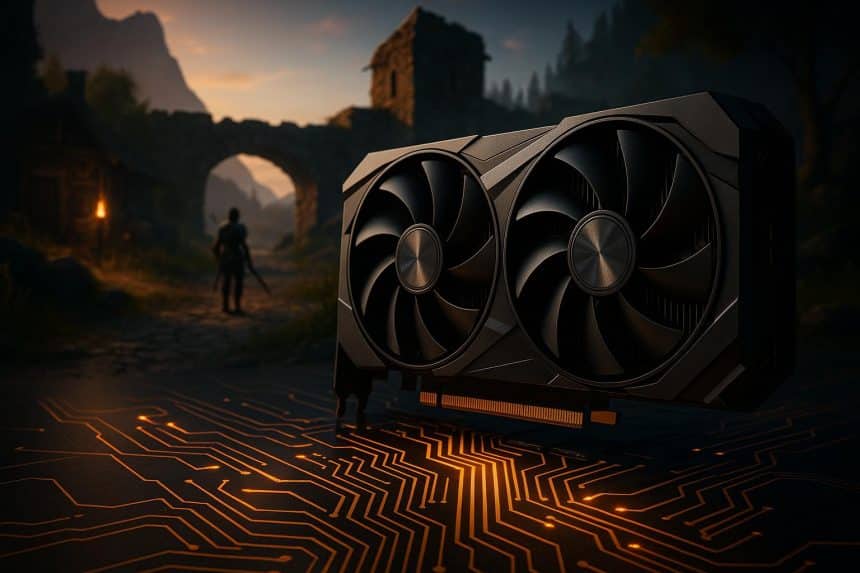
Modern GPUs have reshaped game design in ways that reach far beyond prettier graphics. Over the past decade, graphical hardware shifted from a background component into a central creative tool. Developers now design worlds, mechanics, and even pacing around what today’s GPUs can handle, leading to experiences that feel denser, more reactive, and more expressive than earlier generations allowed.
This shift also changed how players think about value. With visual leaps arriving faster than full hardware refresh cycles, many players balance performance upgrades with smarter spending on games and digital content, sometimes pairing new releases with options like a Razer Gold gift card code to manage purchases across multiple platforms.
Lighting Became a Gameplay Tool
One of the biggest GPU-driven changes sits in lighting. Real-time global illumination, ray tracing, and advanced shadow systems no longer serve decoration alone. Designers now use light to guide exploration, signal danger, or change the mood of a space dynamically. Dark corridors become readable through subtle reflections, while open environments gain depth through accurate light bounce.
This approach influences level layout. Spaces must account for visibility at different times of day or under changing conditions. A room designed for stealth at night may play entirely differently during daylight, and that dual purpose pushes designers to think in systems rather than static scenes.
Worlds Grew Denser Without Losing Performance
Modern GPUs handle massive amounts of geometry and texture data at once. That capacity allows environments packed with detail, interactive props, and background activity without overwhelming performance budgets. Cities feel populated, forests feel alive, and interiors gain personality through small visual cues.
Design teams respond by shrinking empty space. Instead of wide areas filled with repetition, worlds favor layered detail. Verticality, clutter, and environmental storytelling all thrive under higher GPU throughput, encouraging exploration without padding maps with filler.
Animation and Physics Found New Freedom
Character movement once relied on canned animations that repeated often. With more GPU headroom, animation blending and physics simulations gained nuance. Cloth reacts to motion, hair responds to wind, and characters transition between actions more naturally.
This impacts gameplay feedback. Combat feels readable through subtle body language, while traversal gains weight through physical response. Designers can trust visual cues instead of UI prompts, creating experiences that feel intuitive without excessive on-screen indicators.
Effects Started Shaping Combat Design
Particle effects, volumetric fog, and real-time destruction moved into the core of combat systems. Explosions now alter sightlines, smoke blocks vision dynamically, and debris changes how spaces function mid-fight. These elements rely heavily on GPU performance, and their presence changes encounter design entirely.
Developers plan arenas with adaptability in mind. A space that begins open may collapse into cover-heavy chaos after sustained damage, shifting tactics on the fly. Combat becomes less scripted and more reactive, guided by systems rather than fixed sequences.
Art Direction Benefited From Technical Headroom
Higher performance ceilings gave artists freedom to experiment. Stylized visuals no longer compete with performance targets, and realism does not demand compromise elsewhere. Teams can pursue bold color palettes, extreme scale, or unusual camera perspectives without sacrificing stability.
This balance also helps smaller studios. Advanced rendering tools included in modern engines allow lean teams to achieve visual depth once limited to large publishers. GPUs act as equalizers, expanding who can produce visually ambitious games.
Hardware Progress Changed Player Expectations
As GPUs advanced, player standards rose alongside them. Features once marketed as premium became baseline expectations within a few years. Smooth frame pacing, high-resolution assets, and responsive animation now define quality in many genres.
That pressure influences design scope. Games must justify visual ambition through meaningful interaction, not spectacle alone. When graphics reach a certain level, shallow mechanics stand out quickly, pushing teams to align technical prowess with thoughtful design choices.
Budget Gaming in a High-End Era
What is budget gaming? Budget gaming refers to a value-focused way of enjoying games without chasing top-tier hardware or paying full price for every release. Players mix sensible settings, older but capable GPUs, and smart buying habits.
Eneba fits into that approach by offering access to discounted game keys and digital content, supported by a large catalog, competitive pricing, instant delivery, clear region and platform details, and secure payment options.
This mindset pairs well with modern GPU scaling features. Technologies like dynamic resolution and upscaling let mid-range hardware run visually impressive games, reinforcing the idea that smart choices often matter more than raw spending.
Where GPU-Driven Design Goes Next
The influence of GPUs continues to expand. AI-assisted rendering, deeper physics integration, and more complex simulation promise further shifts in how games are built. Designers increasingly treat hardware features as creative prompts rather than constraints.
For players, that evolution blends performance decisions with smarter purchasing habits. Hardware upgrades, digital wallets, and game libraries now intersect more than ever. With digital marketplaces like Eneba offering deals on all things digital, enjoying visually ambitious games becomes less about chasing extremes and more about making informed, flexible choices.