Quick Answer
A dab pen battery isn't just a cell with a button taped on. Inside is a tiny power-management system: a lithium-ion cell, a charging chip, switching components that regulate power to the heater, and (in nicer models) sensors and a microcontroller keeping everything in check. The battery stores the energy, but a small circuit board decides how and when it gets used.
Pop open a dab pen and you'll find… not much. A cylinder, a button, a charging port. It looks like the kind of thing you could sketch on a napkin. But that simplicity is a magic trick. Underneath the plastic shell is a genuinely clever little power-management system, and once you know what's actually happening in there, "just a battery" stops being an accurate description.
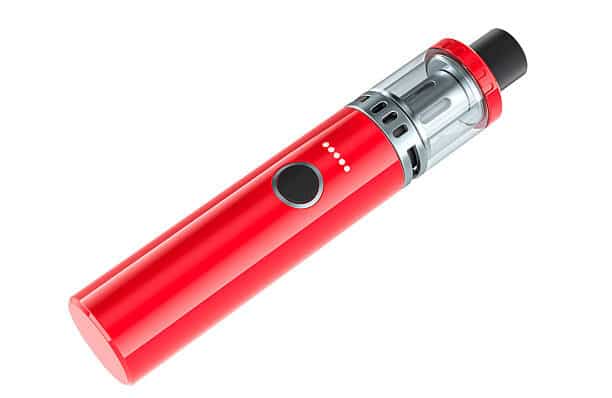
We're going to walk through what's really going on when you press that button — from the cell chemistry to the charging chip to the reason your battery doesn't just explode when you plug it into a wall.
The Cell Itself Is Weirder Than the Number on the Box
Every dab battery worth its salt uses a lithium-ion cell, the same basic chemistry that's in your phone, your laptop, and probably your electric toothbrush. It's popular because it packs a lot of energy into a small, light package and can be recharged hundreds of times without falling apart.
Here's the part that trips people up: a battery labeled "3.7V" doesn't actually sit at 3.7 volts the whole time you're using it. That's just the nominal voltage, basically an average. Fresh off the charger, the cell is closer to 4.2 volts. As you use it, that number slides downward until the battery calls it quits. So the electronics inside aren't dealing with a steady, predictable input — they're dealing with a number that's constantly drifting, and they have to compensate for that drift the entire time the device is on.
Same goes for capacity. The mAh rating on the box tells you how much charge a cell can hold, but it doesn't tell you how long the battery will actually last in your hand. Power settings, how efficient the internal circuitry is, even how you personally use the thing — all of that changes real-world runtime. Two batteries with identical mAh ratings can behave completely differently.
Not All Dab Batteries Are Built the Same Way
"Dab battery" actually covers a pretty wide spread of hardware, and the differences aren't just cosmetic. The most common style is the 510-thread battery — a slim, pen-shaped body with a standard threaded connector that fits most cartridges. These range from bare-bones fixed-voltage models with a single button to variable-voltage versions that let you dial in exact heat levels through a screen or a few clicks of the button.
Box mods take the same basic idea and give it more room to work with. That extra space usually means a bigger cell (or multiple cells), a more capable control board, and sometimes a full display showing voltage, temperature, or puff count. They trade pocketability for runtime and precision.
Then there are disposable or all-in-one devices, which skip modularity entirely — battery, heating element, and reservoir are sealed into one unit meant to be used until it's dead and then tossed or recycled. Their internal electronics tend to be simpler, since there's nothing to swap out and less need for user-facing controls.
Pod-style batteries sit somewhere in the middle: rechargeable body, but a bit more integrated than a traditional 510 pen. And on the higher end, some devices use dual-cell or higher-capacity configurations aimed at extending runtime for heavier daily use, which usually means more sophisticated protection and balancing circuitry to keep multiple cells in sync.
None of these categories change the underlying electrical principles — lithium-ion chemistry, voltage regulation, protection circuitry all still apply. What changes is how much of that engineering the manufacturer chose to build in, and how much control they hand over to the person using it. For more information on the range of batteries currently available, it's worth browsing a few current lineups to see how these categories play out in real hardware.
The Heater Doesn't Just Get Whatever the Battery Feels Like Giving It
If a dab pen simply wired the heating coil straight to the battery, you'd get wildly inconsistent heat as the battery drained, since the raw voltage keeps changing. Nobody wants that. So the device has to step in and regulate things.
One common trick is pulse-width modulation, or PWM. Instead of feeding the heater a constant reduced voltage, the circuit flips the power on and off extremely fast — we're talking thousands of times a second — and controls the ratio of on-time to off-time. Average that out and you get a controllable, steady power delivery, even though technically the power is being switched like a strobe light the whole time.
Other devices use DC-DC converters, which can step voltage up or down depending on what the heater actually needs versus what the battery happens to be putting out at that moment. The switches doing this work are usually MOSFETs, tiny semiconductor components that a controller flips on and off with precision timing.
This is also the mechanism behind power settings. When you bump your pen from "low" to "high," you're not making the battery magically produce more raw voltage — you're telling the control board to change how it's driving the heater, whether that's through PWM timing, voltage output, or how long the heating cycle runs.
What Actually Happens the Second You Hit the Button
A lot happens in a very small window of time. The button press gets picked up by the control circuitry, which checks whether it's actually okay to fire — is the battery charged enough, is anything reporting a fault, that kind of thing. If everything checks out, the switching components open the gate and let power flow to the heater.
The battery supplies the energy. The control board decides whether, when, and how much of that energy actually gets used. That's why a single button can represent several different functions depending on how it's pressed — short press to activate, multiple clicks to change settings, hold to power off. On more advanced pens, a microcontroller is quietly juggling all of this: reading your input, managing the switches, tracking charge status, and running whatever lights or display the device has.
Not every pen has this level of sophistication, to be clear. A basic device might run on much simpler logic. The complexity depends entirely on what the manufacturer decided to build.
Charging Is a Two-Act Process, Not a Light Switch
You'd think charging is just "plug in, wait, done." It's actually a carefully staged process, and lithium-ion cells are picky about how it happens.
Most chargers use what's called constant-current, constant-voltage charging, or CC-CV. According to Battery University, most lithium-ion cells top out around 4.20 volts per cell, though some high-capacity variants push a bit higher. In the first phase, the charger pushes a steady current into the cell and the voltage climbs. Once the cell hits its upper voltage limit, the charger switches strategies — it holds that voltage steady and lets the current gradually taper off instead. That second phase is what fills in the last chunk of capacity, and it's also why the final bit of charging always feels like it's crawling.
This isn't optional fussiness. Overcharging a lithium-ion cell isn't just bad for longevity, it's a genuine safety issue, which is exactly why this staged process exists in the first place. And here's a detail worth knowing: plugging your pen into a beefier charger doesn't mean it charges faster. The charging circuit inside the device decides how much current the cell actually gets, regardless of what the wall adapter is capable of delivering.
USB-C Doesn't Automatically Mean What You Think It Means
USB-C shows up on basically everything now, dab batteries included, and there's a common assumption that the connector itself guarantees fast, smart charging. It doesn't.
A USB-C port can be used as nothing more than a shape — a convenient physical connector with none of the smarter negotiation features behind it. The real upgrade comes from USB Power Delivery, or USB PD, a protocol that lets the charger and the device actually talk to each other. When you plug in a USB PD-capable charger, the two ends exchange a quick set of messages: the charger lists what voltage and current combinations it can offer, and the device requests the one it actually needs. Only once both sides agree does real power start flowing.
So two dab pens can both have a USB-C port and still have completely different charging capabilities under the hood. The connector shape tells you nothing on its own — what matters is the charging silicon actually sitting behind it.
The Safety Net You Never Notice (Until You Need It)
Every lithium-ion cell has hard limits on voltage, current, and temperature, and going outside them can damage the cell or, in worst-case scenarios, create a genuinely dangerous situation. That's where protection circuitry comes in, quietly watching conditions and cutting the connection the moment something looks off.
Depending on the device, that protection layer can guard against overcharging, over-discharging, short circuits, excess current, and — in devices that include the right sensors — overheating. It's worth being honest about what this actually means, though: a protection circuit disconnecting the battery when it detects a problem is not the same thing as a guarantee that nothing can ever go wrong. It's one layer in a bigger safety picture that also depends on the cell quality, the build, the firmware, and how carefully the device is actually used.
mAh Is a Number, Not the Whole Story
It's tempting to shop by capacity alone, but mAh only tells part of the story. Two batteries rated at the same capacity can deliver very different real-world performance depending on their voltage and how efficient their internal circuitry is.
A more complete picture comes from watt-hours (Wh), which factors in both capacity and voltage: roughly, Wh ≈ Ah × V. And because a lithium-ion cell's voltage isn't constant across its discharge cycle, that's still an approximation — but it's a far better one than capacity alone. On top of that, any energy passing through a converter loses a little as heat, so the number printed on the cell is never quite what actually reaches the heater.