A weak battery or cracked screen doesn’t always mean it’s time for a new phone. Here’s what to consider before spending money on an upgrade.
Every September, a new iPhone gives Apple users another reason to think about upgrading. Better cameras, faster processors and new software features are appealing, but they don’t necessarily make an older phone less useful. Someone with an iPhone that’s several years old may still be perfectly happy with its performance, especially if it handles messaging, photography, navigation and everyday apps without difficulty.
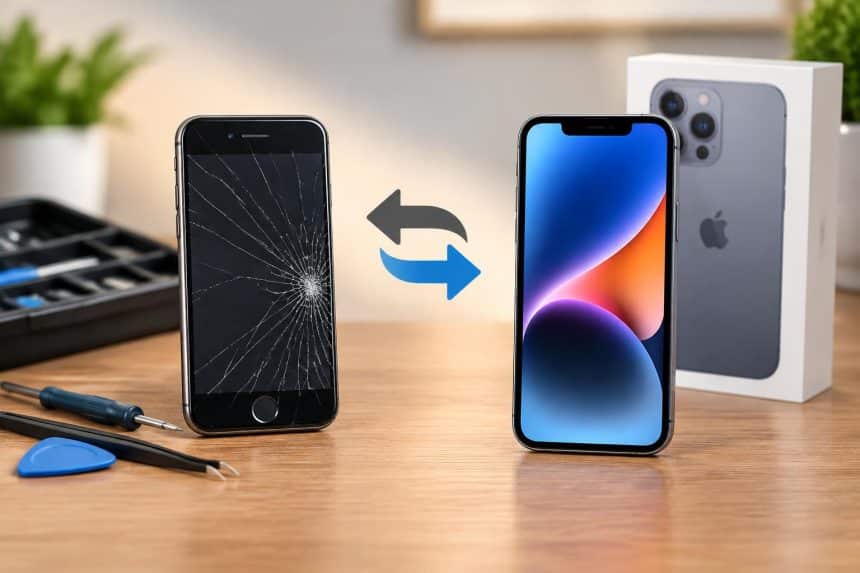
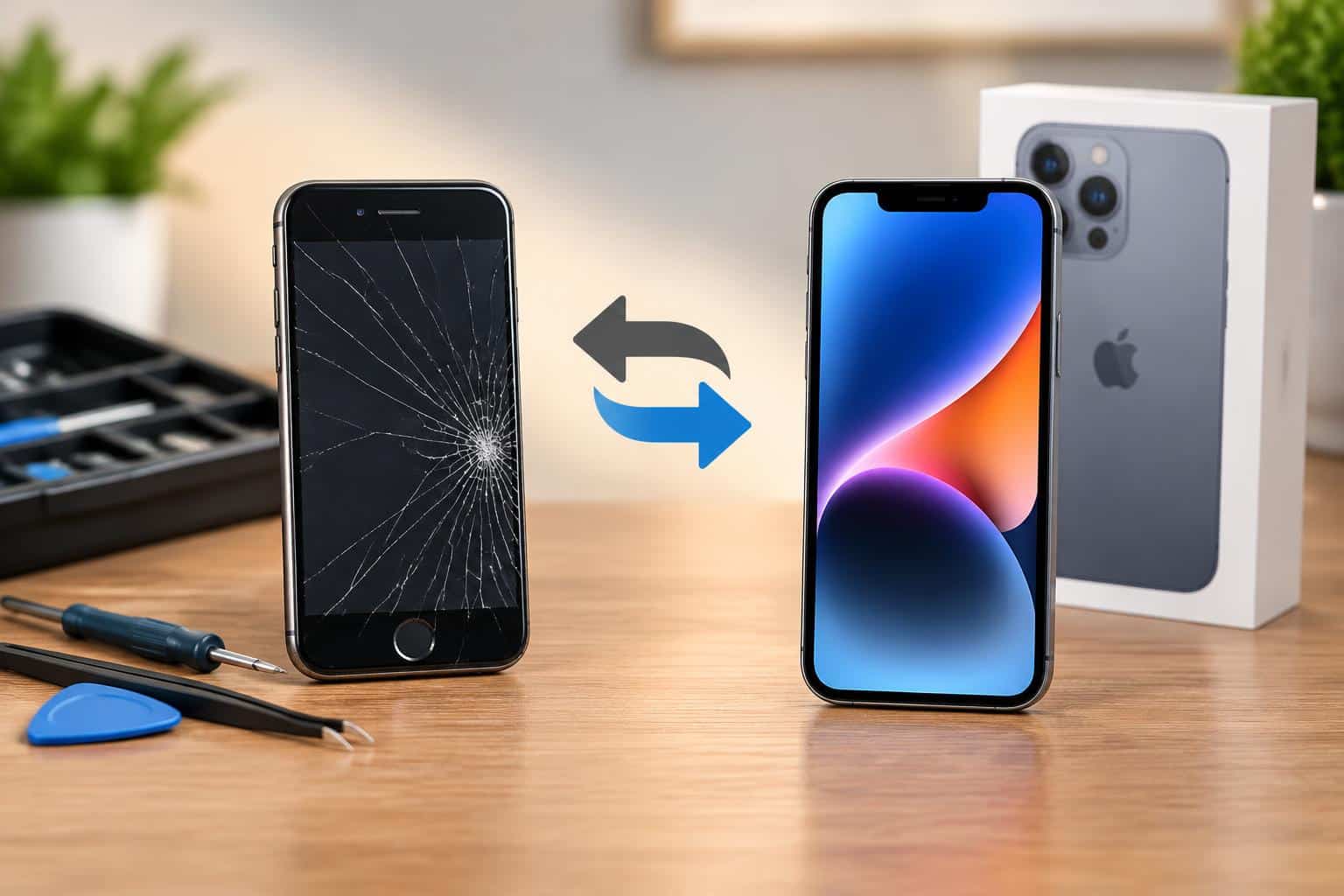
The decision becomes more complicated when something stops working properly. A battery that barely lasts until lunchtime or a damaged display can make replacing the phone feel inevitable. Yet those problems don’t always justify buying a new device. Depending on the model, repair costs and remaining software support, keeping an older iPhone for another year or two may be the more practical choice.
Software Support Matters More Than the Launch Date
An iPhone’s age is only one factor in determining whether it should be replaced. Software compatibility often matters more, particularly for people who use their phones for banking, work or other activities involving sensitive information.
Apple provides major iOS releases for supported devices and may also issue security updates for older software versions. However, not every iPhone receives the same updates indefinitely. As models age, they can eventually lose access to new features and later versions of applications that require a more recent operating system.
Before replacing a phone, owners should check whether their model still receives relevant security updates and supports the apps they regularly use. Apple’s official support pages provide information about available updates, while the App Store lists software requirements for individual applications.
A phone that continues to receive appropriate updates and performs reliably may not need replacing simply because a newer model offers additional features. On the other hand, losing access to essential apps or security support can make an upgrade more important than cosmetic improvements or camera specifications.
When a Repair Makes More Sense
Battery deterioration is one of the most common problems associated with an aging smartphone. Lithium-ion batteries gradually lose capacity, so an iPhone that once lasted all day may eventually require frequent charging.
Owners can check battery health information through their device settings on supported models. If the battery is significantly degraded but the rest of the phone works properly, replacing it may be considerably less expensive than purchasing another handset.
Screen damage presents a similar decision. A minor scratch may have little effect on usability, while a broken display or unreliable touch response can make daily use difficult. Repair costs depend on the model, the extent of the damage and the service provider.
Apple and authorized repair providers offer services for eligible devices, and independent repair shops may provide additional options. Before proceeding, it is worth comparing prices and asking about replacement parts, warranty coverage and any possible effect on water resistance.
The calculation changes when several components need attention. Replacing a battery may be reasonable, but paying for a new display, charging port and battery on the same aging device could bring the total close to the cost of a replacement.
Rather than comparing a repair bill with what the phone originally cost, owners should consider how much useful life the repair is likely to provide.
Comparing the Real Cost of an Upgrade
When replacement becomes the better option, the newest iPhone isn’t necessarily the most economical choice. Previous-generation models can still offer strong performance, while refurbished devices may provide a more affordable alternative to buying new.
Refurbished phones require some additional checks. Battery condition, warranty length, return policies and the seller’s description of cosmetic damage all matter. A lower purchase price may be less attractive if the battery needs immediate attention or the warranty provides limited protection.
For UK shoppers, comparing prices across retailers and mobile networks can also make a difference. Buying a handset separately with a SIM-only plan may cost less overall than a long contract, depending on the upfront price, monthly charges and included services.
Retailer promotions and voucher codes are another consideration. Shopping websites such as PromoPro UK bring together discount codes and offers from UK retailers, giving buyers a place to check for available promotions before ordering a replacement device. Any discount still depends on the retailer’s conditions, and shoppers should confirm that it applies to their chosen product at checkout.
Trade-in offers deserve similar scrutiny. A manufacturer or mobile network may provide credit toward a new device, but the value offered can vary according to the old phone’s model and condition. Comparing the trade-in amount with independent resale options can help buyers understand whether the offer is competitive.
The most useful comparison is the total amount paid, including any contract commitments, delivery charges and other fees, rather than the advertised monthly price or discount percentage alone.
Signs That It’s Time to Move On
There are situations where continuing to repair an older iPhone makes little sense. A device that repeatedly shuts down, struggles with essential applications or can no longer receive relevant security updates may be approaching the end of its practical life.
Other reasons depend on how the phone is used. Someone who frequently records video may benefit from improved camera hardware, while a person who travels regularly might place greater value on battery life or connectivity. For users whose existing phones already handle their daily needs comfortably, those improvements may be less important.
Keeping a phone in service longer can also reduce the frequency of device replacement. Manufacturing a smartphone requires materials and energy, so extending its useful life can have environmental benefits. When a device is eventually replaced, selling, trading in, donating or responsibly recycling it can help prevent unnecessary electronic waste.
Before deciding, it helps to answer three questions: Does the phone still support the software I need? Can its problems be repaired at a reasonable cost? And would a replacement make a meaningful difference to how I use it?
If an older iPhone still works reliably, replacing it can wait. If repairs are becoming expensive or essential functions are no longer dependable, comparing new, previous-generation and refurbished models is a sensible next step. The right time to upgrade isn’t necessarily when Apple announces another phone. It’s when the device you already own no longer meets your needs.