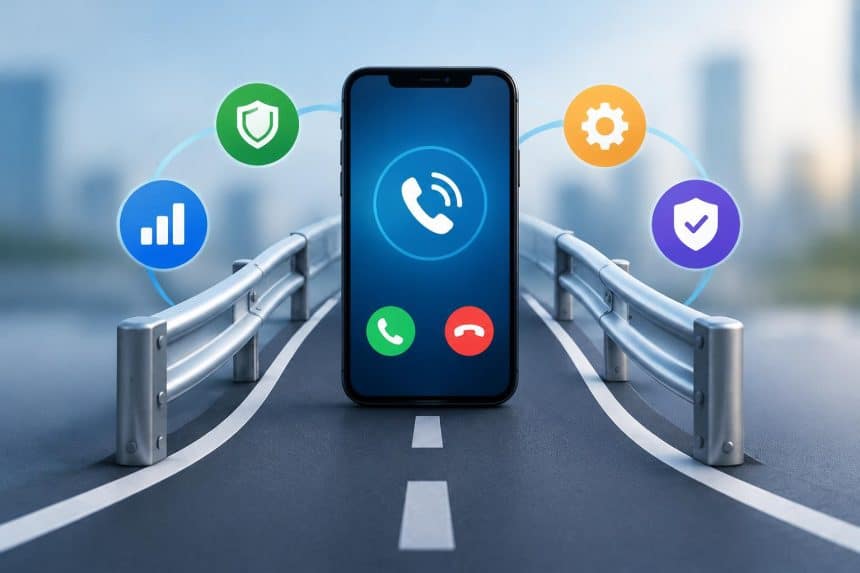
The modern sales desk often fits in a pocket. Account executives close deals from airport lounges, insurance agents follow up with leads between appointments, and collections specialists work remotely with a laptop and a mobile device. This flexibility has expanded how teams reach customers, but it has also widened the gap between how outreach happens and how it is governed.
Mobility Has Outpaced Policy
Many organizations built their contact rules around a centralized call center, where every dial passed through a managed system. When reps place calls and send texts from smartphones, that oversight becomes harder to maintain. A number checked against the National Do Not Call Registry last month may have been added. A lead who replied “stop” to a text may still receive a call through another channel. Each gap creates exposure under the Telephone Consumer Protection Act (TCPA), where statutory damages can reach $500 per violation and up to $1,500 when the violation is willful or knowing.
The Rules Keep Moving
Regulatory change adds pressure. In 2024, the Federal Communications Commission confirmed that calls using AI-generated voices fall under the TCPA’s restrictions on artificial or prerecorded voices, so the TCPA’s consent requirements apply to them. The agency also adopted rules requiring businesses to honor consent revocation made through any reasonable means, such as a text reply or a spoken request, within a set timeframe.
Several states, including Florida and Oklahoma, have their own telemarketing laws with stricter standards. For a distributed team, tracking which rule applies to each contact and time zone is difficult to manage manually.
Building Compliance Into the Workflow
Leaders increasingly treat outreach governance as infrastructure rather than training. Instead of relying on reps to remember restrictions, a compliance phone system checks each number before contact is made, screening against federal and state do-not-call lists, internal suppression records, reassigned number data, and permissible calling windows based on the recipient’s location. This pre-contact approach shifts responsibility from individual memory to a consistent process.
The same principle extends to conversations themselves. Real-time monitoring can flag missing disclosures during a call, and post-call records help demonstrate that procedures were followed if a complaint arises. Documentation matters because, in a dispute, a company must often show what consent existed and when it was given.
What Leaders Should Prioritize
Start with visibility. Map every channel reps use, including texting apps and softphone tools on mobile devices, since unmanaged channels are where violations tend to originate. Next, centralize consent and opt-out data so that a revocation on one channel is reflected across all of them. Then review how AI-assisted outreach tools are configured, because automated messaging and synthetic voice features carry the same consent obligations as traditional dialing. Finally, schedule regular audits, so policies evolve alongside new regulations rather than lagging them.
The Business Case
Compliance controls are sometimes viewed as a drag on productivity. In practice, clean contact data reduces wasted dials, helps protect caller ID reputation from spam labeling, and lowers the cost of legal defense. Customers also tend to respond more positively to outreach that respects their stated preferences and timing.
As selling continues to move onto mobile screens, the organizations that scale safely will be the ones that make every contact defensible before it is made.