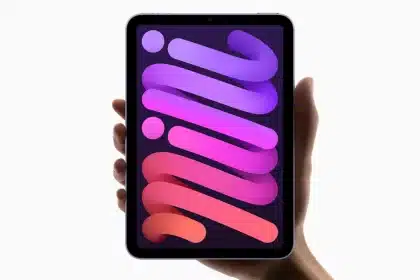
Arthur C. Clarke's 2001 Newspad finally arrives, nine years late
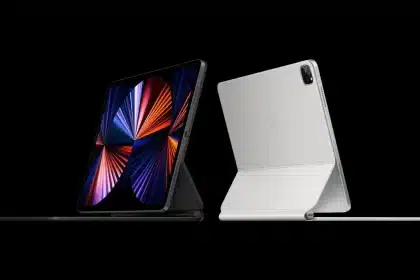
One of my all-time favorite movies is Stanley Kubrick's 2001: A Space Odyssey. At several points during the film, we see ill-fated astronauts David Bowman and Frank Poole using a flat, iPad-like device. In one of the posters for the movie, astronauts at a base on the Moon are seen using this device (see image at right).Those who read Arthur C. Clarke's companion novel will remember that he described this device as the "Newspad," something that was used by people of the future (as envisioned in 1968) to watch TV and read newspapers. You can read the full description of the device after the break -- it's described as a newsreader, with two-digit codes for each article online, and a constant stream of information from the hourly updates on "electronic papers."
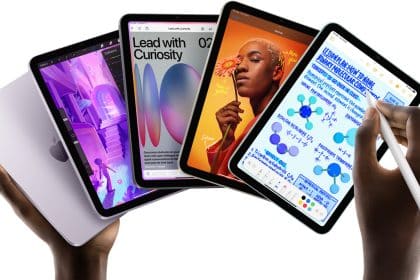
Of course, we don't have two-digit references to articles; we simply need to tap on them to bring them up. We do need to know the "codes" for the world's major electronic papers; we refer to them as URLs or specific apps. But like many things Clarke foresaw in his lifetime of writing science fiction, the Newspad has finally become reality in the form of Apple's iPad.
I think Arthur would be proud.
When he tired of official reports and memoranda and minutes, he would plug his foolscap-sized Newspad into the ship's information circuit and scan the latest reports from Earth. One by one he would conjure up the world's major electronic papers; he knew the codes of the more important ones by heart, and had no need to consult the list on the back of his pad. Switching to the display unit's short-term memory, he would hold the front page while he quickly searched the headlines and noted the items that interested him.
Each had its own two-digit reference; when he punched that, the postage-stamp-sized rectangle would expand until it neatly filled the screen and he could read it with comfort. When he had finished, he would flash back to the complete page and select a new subject for detailed examination.
Floyd sometimes wondered if the Newspad, and the fantastic technology behind it, was the last word in man's quest for perfect communications. Here he was, far out in space, speeding away from Earth at thousands of miles an hour, yet in a few milliseconds he could see the headlines of any newspaper he pleased. (That very word "newspaper," of course, was an anachronistic hangover into the age of electronics.) The text was updated automatically on every hour; even if one read only the English versions, one could spend an entire lifetime doing nothing but absorbing the ever-changing flow of information from the news satellites.
It was hard to imagine how the system could be improved or made more convenient. But sooner or later, Floyd guessed, it would pass away, to be replaced by something as unimaginable as the Newspad itself would have been to Caxton or Gutenberg.
From 2001: A Space Odyssey , by Arthur C. Clarke.
Published by Del Rey in 1968

Share
Categories
One of my all-time favorite movies is Stanley Kubrick's 2001: A Space Odyssey. At several points during the film, we see ill-fated...
Add a Comment
That's very funny and a nice reminder. Looks like corporate control of information is one of Steve Jobs's next great innovations. I wonder if he'll ever realize he's become the villain of the infamous "1984" commercial? Except, he might be a little worse with the organ stealing and all (http://exiledonline.com/memphis-where-the-oligarchs-eat-their-fellow-americans/).
Anyway, I hope you don't mind, but I'd like to link to this post on my blog about iPad alternatives ( http://www.alternatives2ipad.com ) All the best.
"novelization of the movie"
That word does not mean what you seem to think it means. (Or in other words: you've got that backwards as forwards
"Open flash.com iPad."
"I'm sorry Dave, I can't do that."
Actually, the movie and book were based on a short story, The Sentinel. Arthur C. Clarke and his collaborators invented several items while working on the movie and book projects, including the PDA. Previously Clarke received about $50 (I forgot the exact amount) for his article in Wireless World that included the first description of an electronic communications satellite.
January 29 2010 at 7:21 PM Report abuse Permalink rate up rate down ReplyI think it was even more astonishing: http://foto-uploaden.nl/zie/8bbui79
January 29 2010 at 9:20 AM Report abuse Permalink rate up rate down ReplyJust a small point, but Arthur C Clarke didnât write a 'novelization of the movie'. The book came first. It would be more accurate to say that the movie was a 'movieization' of the book!
January 29 2010 at 3:24 AM Report abuse Permalink rate up rate down ReplyOops! Just spotted that A Duncan made the same point. Sorry for the duplication.
January 29 2010 at 3:26 AM Report abuse Permalink rate up rate down ReplyRegarding the book coming before the movie:
Actually, this is a rare case of both the movie and the book being written at the same time. Kubrick probably contributed ideas to the book as much as Clarke contributed to the film.
They had iPads in Star Trek, as I recall.
January 29 2010 at 1:13 AM Report abuse Permalink rate up rate down Reply"...Arthur C. Clarke's novelization of the movie..." What? I think you will find that the movie was based on the book, not the other way around. So Kubric made a movie-ization of the book.
January 28 2010 at 8:47 PM Report abuse Permalink rate up rate down Reply""...Arthur C. Clarke's novelization of the movie..." What? I think you will find that the movie was based on the book, not the other way around. So Kubric made a movie-ization of the book."
Not quite... the original was Clarke's short story, The Sentinel. The novel and the movie script were developed together, with Kubrick contributing and acting as editor (i.e. getting Clarke to drop some not-so-good ideas). "The Lost Worlds of 2001" is worth a read for the back story and some of the alternative versions that didn't make the novel/movie, if you can find a copy.
Hi, del Rey books wasn't founded until 1977; the novel was originally published by New American Library in 1968.
http://en.wikipedia.org/wiki/Del_Rey_Books
http://en.wikipedia.org/wiki/2001:_A_Space_Odyssey_(novel)
Arthur C. should have pulled a few patents in '68.
January 28 2010 at 6:14 PM Report abuse Permalink rate up rate down ReplyHot Apps on TUAW
Deals of the Day
more deals- Bracketron Stand with Headrest Mount for iPad 2 for $11 + free shipping
- Philips wOOx Alarm Clock Radio for Apple iPod / iPhone for $60 + free shipping
- iWatchz Elemetal Collection Bracelet for iPod nano for $75 + free shipping
- Skullcandy Ink'd Mic'd Stereo Earbuds for $5 + $2 s&h
- Refurb Logitech Bluetooth Keyboard / Stand for Apple iPad for $31 + $4 s&h
- SanDisk Sansa In-Ear Headphones 2-Pack for free + $4 s&h
Software Updates
more updates- EFI Firmware Update brings Lion Internet Recovery to 2010-model Macs
- OS X Lion 10.7.3 released with Safari 5.1.3, Wi-Fi bug fix
- Aperture updated to 3.2.2, addresses Photo Stream issue
- Apple updates Keynote to address Lion issues
- Google Search app gets new look on iPad
- Apple releases Apple TV Software Update 4.4.3


33 Comments