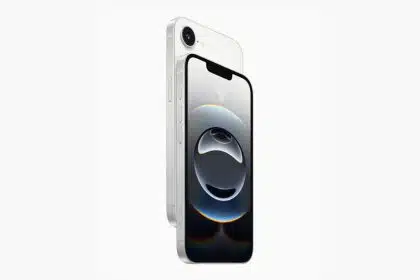
Microsoft pays Apple app devs to port to Windows Phone 7
Who would have thought this would ever happen? Microsoft, according to PocketGamer.biz, is throwing some substantial upfront money at developers of popular iPhone apps to port their products over to Windows Phone 7, which may be their last great hope of getting enough apps on the device to make it tempting. It doesn't seem to be going over all that well, since the word is that it's not really worth the money to go through the time and expenditure to port the One of their sources did say that there was the potential for Microsoft to alter their development frameworks to include
Update: Sorry for the mixup. Both PocketGamer and 9to5 are citing the challenge of porting C++ games to C#; however, if the point is to move iPhone apps to WinPhone 7, as our commenters have rightly noted, then it's a migration from Objective-C instead.
[via 9to5 Mac]
Share
Categories
Who would have thought this would ever happen? Microsoft, according to PocketGamer.biz, is throwing some substantial upfront money at...
Add a Comment
if MS did include a objective-c framework+runtime on their windows OSes then I would consider to develop for them.
but if I have to fight with .net ... no thanks
Another multi-platform developer here! We can do Palm, Windows Mobile, Windows, Mac, iPhone, Android all from the same codebase, with thin skins of C++, C++, C++, Objective-C, Objective-C, Java; but we're locked out of Windows Phone 7 because we'd have to duplicate all our C++ source code and double all our maintenance and update efforts thereafter. Not good.
C++/CLI is not C++.
I am a game developer with an app on both android and iPhone. My codebase is approx 40,000 lines of c++ code, with the iPhone interface layer being less than 1000 lines of objective c code and the android layer less than 1000 lines of java code.
To port to windows phone currently would require a complete rewrite due to c#. If they supported c++ I would just need a small interface layer and to replace about 4000 lines of code that uses OpenGL with a directx layer which I already have implemented.
For me, it is 100% a language issue. For any of my games to show up on windows phone they will need to add c++ support or totally dominate the market.
Well, most games for iPhone are in c++ so you were right the first time around. c++ compiles just fine inside XCode with a bit of Objective-c++ just to hook up the views.
June 15 2010 at 12:34 PM Report abuse Permalink rate up rate down ReplyWow - there seems to be a lot of confusion here!
The question is not whether developers write their Windows Phone 7 apps in Objective-C but whether they can port existing C++ apps.
Sure, most of the APIs available on the iPhone are Objective-C, but many developers will have their own APIs written in C or C++. This is especially true for games developers who may be using OpenGL or custom physics engines.
As an iPhone developer (who has written cross-platform C++ apps which run on Window, OS X and the iPhone) I would not expect Windows Phone 7 to support Objective-C or any of the Apple APIs. However, I would expect to be able to use C / C++.
The issue is whether Microsoft are allowing unmanaged C++ to be used along with C#Â or whether developers are only able to use managed C#.
http://www.pocketgamer.biz/r/PG.Biz/Windows+Phone+7/news.asp?c=18776
For what it's worth, I believe your original article needed no correction and the whole Objective-C thing is a complete red-herring.
From what I've heard, there is no native development for Windows Phone 7, which is one of the reasons why Mozilla killed their port of Mobile Firefox for it. Its all .NET stuff. Whether that means any .NET language, or only C# and VB.NET is yet to be seen.
June 15 2010 at 1:29 PM Report abuse Permalink rate up rate down ReplyAt some point, Microsoft just decided they could no longer be embarrassed or ridiculed too much. They just copy and mimic and are a very desperate company. I cannot imagine being an employee and telling people who I work for.
June 15 2010 at 11:54 AM Report abuse Permalink rate up rate down ReplyIt almost pains me to up-rank Jordan... but he's right.
June 15 2010 at 12:06 PM Report abuse Permalink rate up rate down ReplyObjective-C support for .NET wouldn't help at all; almost all native iPhone apps are built entirely upon Cocoa TOuch and Core Foundation. It's a not a lnaguage issue, it's a framework issue.
June 15 2010 at 11:10 AM Report abuse Permalink rate up rate down ReplyThank you for making this point. Everyone, once and for all, it's the API, **not the language**, that is the big barrier to switching platforms for developers.
June 15 2010 at 12:37 PM Report abuse Permalink rate up rate down ReplySilverlight applications don't have to be in C#, VB.NET's another alternative if that's more your thing. I know that the latest version of IronPython also produces Silverlight web pages but I don't know if that means you can use Python to develop for Phone 7.
June 15 2010 at 11:05 AM Report abuse Permalink rate up rate down ReplyYou should correct this article as the 2 preview posts pointed out, Cocoa and Cocoa touch are a framework of Objective-C and no C++ (even when you can use C and C++ statements while coding, they are not the same), MS will not implement Objective-C on they frameworks since it is most based on OpenSteps (which is based on NeXTsteps, that it is an extension of the original Objective-C from StepStone).
The framework uses specifically extensions of POSIX and UNIX that are not present on Windows based OS (even mobile's one).
Hmm. Now correct me if I'm wrong, but calling C++ the same thing as Objective-C is a pretty inaccurate statement (and I think for the most part, iPhone apps are Objective-C), and C# is also much, much easier to work with than C++.
I'm not really in a good position to comment on C# vs Objective-C, but I think there are a lot more developers out their who would be more familiar with C# because it's almost syntactically the same as Java and several other dot-notation languages. (I'm a C# coder on a daily basis, but I have played with Objective-C).
However, translating from Objective-C to C# would still be an expensive process - It appears to be rare that you find someone who can read/write both languages fluently. The majority of coders will be either in the Microsoft-camp or in the Apple-camp, but not usually both.
Hot Apps on TUAW
Deals of the Day
more deals- Verizon Leather Sleeve for Tablets for $4 + free shipping
- Wicked Jaw Breaker Noise-Isolating In-Ear Headphones for $6 + free shipping
- Refurb Apple MacBook Air Laptops: 12" 64GB SSD for $699 + free shipping
- JVC Motion Sensing Clock Radio with Dual iPod Docks for $55 + free shipping
- Apple iPhone Headset with Mic for $4 + $2 s&h
- Refurb Apple iPod nano 8GB MP3 Player for $99 + free shipping, 16GB for $119
Software Updates
more updates- EFI Firmware Update brings Lion Internet Recovery to 2010-model Macs
- OS X Lion 10.7.3 released with Safari 5.1.3, Wi-Fi bug fix
- Aperture updated to 3.2.2, addresses Photo Stream issue
- Apple updates Keynote to address Lion issues
- Google Search app gets new look on iPad
- Apple releases Apple TV Software Update 4.4.3


15 Comments