Helping autistic children with iOS devices

Autism is a developmental brain disorder that, in some manner, plagues one out of every 110 children (according to the Centers for Disease Control). It's usually discovered by the time the child is three years old. Varying medical and scientific authorities characterize the condition in different ways, but scientists generally agree that autism spectrum disorders (ASD) manifest themselves in social, communication, and behavioral challenges. The SF Weekly recently wrote about a number of families with autistic children and how the iPad is proving to be quite useful in helping them.
A number of studies have been done on the use of iPhones and iPods as aids for the autistic. One such study was titled iPod Therefore I Can: Enhancing the Learning of Children with Intellectual Disabilities Through Emerging Technologies, and it tracked the progress of 10 autistic children who were using iPod touches in Australia.
The results were quite encouraging. In one case, a child who could not wash his hands was exposed to photos (combined with voice-overs) of a child doing it successfully. Through this method, the correct behavior was reinforced, and in short order, the child was able to wash his hands by himself. About 60 percent of the goals of the study were achieved.
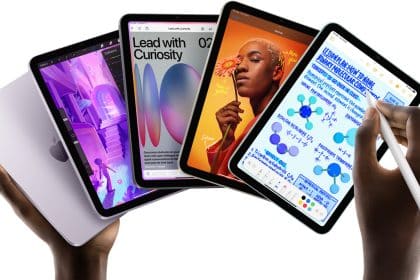
The results of this and other studies have been encouraging, but a major problem for 60 to 80 percent of autistic children is poor motor skills, including poor motor planning, which makes using the small buttons on an iPhone or iPod touch quite difficult. Because of the larger size of an iPad, it can be much more accessible to a larger number of autistic children.
The first major study concerning autism and the iPad (titled Touch Technologies in the Classroom) is currently underway in Toronto. In February, iPads and and iPod touches were installed in six classrooms where they could be used by autistic children. The data is still being analyzed, but the results seem to be positive and indicate that the use of these devices can extend short attention spans, demonstrate understanding, and increase interest (at least in playing with the iPad) when students were previously found to have scant interest in much of anything. One major problem with the use of the iPad is that it is quite fragile, and a good number of autistic children are prone to violent outbursts. One big tantrum could easily result in a shattered iPad.
A large number of apps have been introduced to assist the autistic, and they seem to fall into three categories: those that help with attention span, those that help with communication, and those that help with organization.
Short attention spans are found in the the majority of children with ASD, and this can be a major problem in public if the child gets bored and acts out. One app that seemed to help is iEarnedThat (US$1.99). This app allows parents to use pictures (or take one if they're using an iPhone) for creating jigsaw puzzles with varying numbers of pieces and is compatible with iPhone, iPod touch and iPad. Next, the parent determines a reward. The general idea is that each time a child completes a positive task, they get to put a piece in the puzzle, which when finished, reinforces the behavior, and the child will get the reward.
One parent of an autistic child used it in a simpler manner, though. In an airport, after finding out that their flight would be delayed, her son started to act out. She used iEarnedThat to create a 30-piece puzzle, which occupied her son for the next half-hour. (He was used to doing 15 piece puzzles.) The reward was cookies. This may not seem like much, but it averted a crisis and taught the parent that her child could be occupied for longer than she ever imagined.
For children who need to master simple organizational skills in a particular sequence (for example, find toothbrush, find toothpaste, take the cap off, wet toothbrush, brush teeth, etc.), there are a few apps that can help. One is First Then Visual Schedule (US$13.99). This app is also compatible with multiple devices, and it uses pictures and voice recordings to build a lock-step sequence that can be repeated. Another app is Stories2Learn (US$13.99), and it's also not iPad specific. This app is used to create social stories that will show the child how to behave in certain situations. Using an iPhone, photos of the child demonstrating the correct behavior can be sequenced into stories that use text, photos, and recorded sounds. This app has been used to model how to behave at the dinner table, or it could be used to set up sequential tasks in a narrative format. I haven't had a chance to use either of these apps, but they both provide context and motivation, which are critical for success.
We've covered a few augmentative and alternative communication (AAC) apps, which allow non-communicative children to make their intentions known. Proloquo2Go (US$189.99) is the most extensive of these apps. It's enhanced for the iPad, and it allows the building of phrases through the use of customizable buttons. As is the case with other AAC apps, the price is absurdly low when compared to the non iPad/iPhone competition of standalone devices that can cost anywhere from $3,000-$8,000. A much simpler (and cheaper) app is the AutoVerbal Talking Soundboard (US$8.99). This iPad-enhanced app allows for the customization of one row of buttons. You can choose from hundreds of preset buttons that speak one phrase when touched. Another limited feature app is iConverse (US$9.99), and it's not iPad enhanced. This is geared for low functioning autistic children, and it allows them to use six buttons to display common needs, including bathroom, eat, drink, sick, break, and help. The current version allows voice recording to customize the six graphics.
These examples are harbingers of more and better apps to come. Compared to something like games, the market is quite small, and the research that drives such apps is slow to filter down to a product development stage. Given that, I would expect to see a slow but constant trickle of Assistive Technology apps being released.
Matthew Goodwin, Director of Clinical Research at the MIT Media Lab, is planning to launch a major project that studies what "sexy" technologies (like the iPad) can do for the autistic. He doesn't see the iPad as the perfect device, but he says that "it is currently a very appealing system given its size, rich screen display and processing power." Goodwin believes that the technology can potentially make the lives of the autistic easier. However, if they're successful, they may be able to do something that's just as important: demonstrate to society the hidden potential in children with autism.
[via SF Weekly]
Share
Categories
Autism is a developmental brain disorder that, in some manner, plagues one out of every 110 children (according to the Centers for...
Add a Comment
Hello,
My name is Mei Ling and I am the author of a book about autismâs cause in many cases. Even Dr. Stephen Edelson of Autism Research Institute agrees with me that in some cases autism may have been misdiagnosed and in my book, I give two FDA reports to prove that mercury is being INGESTED in both certain baby formulas and assorted infant foods, namely amounting to 15 dangerous substance foods for infants and toddlers.
One FDA report is dated in 1999 and updated in 2003 as well as in 2008 and it shows more than 50 table foods that contain mercury, 15 of them baby foods and assorted infant formulas (both soy and milk based), so the book proves that autism may in fact be Minamataâs Disease in some cases by the ingestion of mercury. Also, if you continue to build a growing brain and compile mercury into it, new symptoms of Minamataâs Disease could happen, so you need the current FDA list in the book to plan out a dietary intervention strategy in your childâs life. You do not want your child to ingest more mercury and need to be apprised of the foods it is inside since even in an egg or even in a tomato, mercury has been discovered to exist in 1999 and no federal recall has happened to delete the foods with mercury from the American table.
In 2010, mercury was found to be inside a brand of ice cream and even inside some bean soup as some examples of how you can impact the childâs brain through the further ingestion of mercury while the brain is maturing. Because you own 25 years to grow a reasoning center of a brain (according to the Dr. Phil Show), it may take that long to order up a stringent dietary intervention plan to neglect the further ingestion of harsh toxic substances such as mercury, lead poisoning and pesticide residue.
We do not know how far back the ingestion of mercury has been happening in America and in all countries wherein these 15 products have been being exported into, but we can prove that as far back as 1999, ingestion of mercury in baby products and certain table foods has been happening.
Also in the book is a dietary intervention plan that has not only the worldâs most nutrient-densified âsuperâ foods such as crab (which is 513% higher than the RDA for Zinc - the âhealing mineralâ) to grow the strongest brain and body, but also anti-viral fruits, oils and herbs in case the measles virus has gone into the brain.
Dr. Andrew Wakefield has already proved that the measles virus is contained inside the intestines of some children with Intestinal Bowel Syndrome (IBS) and Dr. Andreas Kesel of many PubMed Reports about mega vitamin therapy and viruses has said that Vitamin A and Vitamin B6 help take care of the measles virus. Dr. Bernard Rimland of ARI did say in the 1990s that autismâs cognitive abilities in the brain are enhanced by mega amounts of Vitamin B6 (and Magnesium, the reason that SuperNuThera was formulated for autistic children). Therefore, it is conceivable that the measles virus has struck the brain and there is a need for anti-viral fruits, oils and herbs in the diet of an autistic child.
My book is called MERCURY IN BABY FOODS: WHAT THE FDA KEPT FROM THE WORLD OF AUTISM and I suggest you get a copy of those two FDA reports inside this relevant book about autism since even today more than 50 foods like bean soup contain mercury, mercury ingestion also known to cause Chronic Fatigue Syndrome (CFS) and CFS patients removing the mercury dental amalgams from their mouths to counteract any attack the dangerous vapors can have on the brain.
There is no word about how the mercury became contaminated inside so many baby foods, but an investigation needs to be made somehow and I am counting on the world of autism to bring this matter to a head.
You do not want to get new symptoms by trying to grow a brain under the duress of further contamination through ingestion of mercury in table foods as the child begins to grow, so youâll want the current FDA report by your side if you start any kind of dietary intervention plan. New symptoms could mean that mercury in table foods has impacted the recovery process and some children have been cured of autism through dietary intervention to grow the strongest brains out of the most nutrient densified foods, a case in point being Raun Kaufman of the Option Institute in Sheffield, Massachusetts. His story was relayed in a book and movie named SONRISE: THE MIRACLE HAPPENS and it was his diet plus a developmental strategy therapy that helped him to reach a reversal of his diagnosis and a degree at an Ivy League university. In my book, I explain all that I learned when I took lessons at The Option Institute to find out what caused such succ
Hot Apps on TUAW
Deals of the Day
more deals- Verizon Leather Sleeve for Tablets for $4 + free shipping
- Wicked Jaw Breaker Noise-Isolating In-Ear Headphones for $6 + free shipping
- Refurb Apple MacBook Air Laptops: 12" 64GB SSD for $699 + free shipping
- JVC Motion Sensing Clock Radio with Dual iPod Docks for $55 + free shipping
- Apple iPhone Headset with Mic for $4 + $2 s&h
- Refurb Apple iPod nano 8GB MP3 Player for $99 + free shipping, 16GB for $119
Software Updates
more updates- EFI Firmware Update brings Lion Internet Recovery to 2010-model Macs
- OS X Lion 10.7.3 released with Safari 5.1.3, Wi-Fi bug fix
- Aperture updated to 3.2.2, addresses Photo Stream issue
- Apple updates Keynote to address Lion issues
- Google Search app gets new look on iPad
- Apple releases Apple TV Software Update 4.4.3


1 Comment