Skip to Content

FTC and DOJ monitoring Apple's new subscription policy

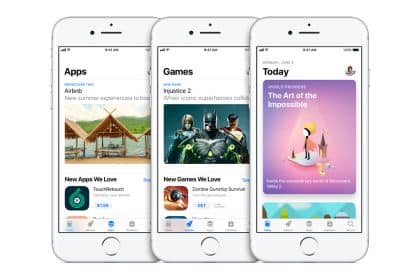
Both the Justice Department and the Federal Trade Commission are aware of the new policy Apple implemented for media companies with applications in the App Store. The new terms state "that if an app offers customers the ability to purchase books outside of the app, the same option is also available to customers from within the app with in-app purchase."

A prime example is the Sony Reader app which was reportedly rejected from the App Store because its iOS app linked to its own digital store and did not use Apple's in-app purchase system to sell its eBooks. This new policy takes effect June 30 and will drive many purchases through the App Store, giving Apple a 30% cut.

U.S. regulators are taking a closer look at this policy to determine if it runs afoul of any federal antitrust laws. This interest is preliminary and may not turn into a formal investigation or sanctions against the company. The European Union is also closely monitoring this situation, but is currently not taking any action either.

Apple was under the microscope last year following its decision to ban iOS applications developed using third-party tools such as Adobe Flash. Both the FTC and the European Commission launched an investigation, but Apple reversed this policy before a decision could be made by either regulatory body.


Categories

iOS

Both the Justice Department and the Federal Trade Commission are aware of the new policy Apple implemented for media companies with...
 

Add a Comment

*0 / 3000 Character Maximum Comment Moderation Enabled. Your comment will appear after it is cleared by an editor.

17 Comments

Filter by:
Steve

Apple's cut isn't 30%.

The publisher gets 70% of the stated price. But Apple only gets what is left, which in many cases is zero or a small loss.

For example, I rarely buy iTunes vouchers at face value. I frequently see offers like buy 2x $20 vouchers for $30 in stores near me. At that price, even assuming that the stores are offering the vouchers at cost, Apple is only getting 75% of the face value. Since 70% of the face value is paid to the publisher, Apple is only left with 5% to handle the transaction costs, delivery and much of the product support costs.

The only thing "sinister" about the deal that I can see is the requirement that special offers in other channels must be matched within the iTunes store.

February 18 2011 at 7:45 PM Report abuse rate up rate down Reply
1 reply to Steve's comment
Charli

The whole gift card thing is moor. If the card is $10, Apple got $10. Assuming they aren't stolen numbers.

Stores will often sell gift cards at a discount as a loss leader. It gets you into the store where hopefully you will look around and buy stuff that does make them money. Heck Amazon uses, or used to use, Kindle books the same way

February 19 2011 at 1:50 PM Report abuse rate up rate down Reply
ojfl

Monitor, sure, meddle, not yet. I do not think it warrants any government involvement yet.

February 18 2011 at 5:54 PM Report abuse rate up rate down Reply
Charli

Re: that final comment. There is no definitive proof that anyon would have sided against Apple regarding the Flash issue. As noted, Apple changed the rules on their own, rendering the whole thing moot

February 18 2011 at 5:48 PM Report abuse rate up rate down Reply
Rego

It's Apple's ecco-system. It can and should govern it as it sees fit.

Those who don't like it can go to a sucky "me too" clone or they can purchase publications from the provider's site or the old fashioned way.

February 18 2011 at 4:47 PM Report abuse rate up rate down Reply
4 replies to Rego's comment
TheCastro

Don't worry Apple, like almost all things (if this is found to be illegal) you'll pay a fine equal to less than 10% of the profit you made from it while doing the illegal practice. Aw America, where corporations come first and the people second, lets buy some congressman.

February 18 2011 at 1:38 PM Report abuse rate up rate down Reply
macserv

This is good; the FTC and DOJ should certainly be paying attention to things like this. However, nothing will come of it unless the law changes.

February 18 2011 at 1:21 PM Report abuse rate up rate down Reply
1 reply to macserv's comment
TIm

I don't know about that. The same thing was said with the advertiser regulations a few month back and apple had to backpaddle quite a bit there too. Not that they got or necessarily would have gotten fined, but it certainly added to the pressure.

T

February 18 2011 at 2:21 PM Report abuse rate up rate down Reply
mabhatter

From a legal point of view this is like setting up a card table at your local mall to provide a service but not paying the mall rent.
Apple's rent is the 30% cut. The entry fee is just $99. How about XBox? Don't I have to buy "points" in microsoft's private piggy bank to buy anything? Or Sony where I have to "lease" expensive deb kits, and pay for approval, and provide my own bandwidth/servers or rent form Sony.

Apple's 30% is high, but that's their deal. In-app purchases are mostly a scam anyway to get people to download a "crippled" app. Very few have items that could't be part of the initial price for a few bucks more.

February 18 2011 at 1:12 PM Report abuse rate up rate down Reply
3 replies to mabhatter's comment
jimdovey

I've written some more detail on the reasons why this is investigable, and a suggestion how the situation might be made better for all involved:

http://quatermain.tumblr.com/post/3365005188/the-doj-and-the-ftc-and-the-eu-oh-my

February 18 2011 at 12:57 PM Report abuse rate up rate down Reply
Buy an ad here

Tweets

© 2012 AOL Inc. All Rights Reserved.