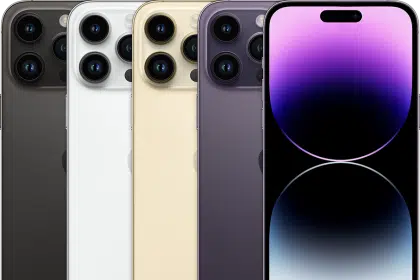
The folks at iPhon.fr have got what appear to be two photos of iPhone 2.0 in the wild. It's in keeping with the other photo we saw of a black iPhone, though the logo appears grey this time, as opposed to the bright white, and the rear of the case seems less rounded.
The only thing we dislike about this shot is how scratched up the rear of the unit appears to be. My own phone is (I assume) older than this model and not nearly as scratched - and I don't use a case!
Of course, we could be comparing fake photo #1 to fake photo #2 here, so take all of this with a grain of iSalt. We'll all see the real thing soon enough, and we can look back on Photoshop jobs like this and laugh and laugh.
I am, admittedly, a fan of desktop apps that keep me from having to wade through immense websites, especially when said desktop apps are significantly better looking than said websites. Photonic, which was just released as an open beta, is one such application. It brings beauty and class to Flickr and, at least for me, makes it more enjoyable.
We covered another cool Flickr app recently called FlickrFinder, which I fell in love with for its simplicity. Photonic raises the bar by adding an uploader that is as good or better than Flickr's own Flickr Uploadr, and decidedly more Mac-like. Meanwhile, the alluring interface and a dash of Core Animation make it a pleasure to use.
My raving aside, it's definitely still a beta. I had a few strange problems with the upload date that resulted in an image getting lost in the pile, and fairly frequently entire streams came up as "currently unavailable" pages. But I'll put up with a lot of growing pains for a tool this cool.
It's no big secret we love the funky look and wonderfully simple apps that come from the Plasq team. And there's no denying that Comic Life was a big hit for them. To follow that act they've been working on Comic Life Magiq, which we only had a taste of so far, but it looks just as funky and useful as you'd expect from these guys. Check out one of those age-old photo tasks: cutting a person out of a background. They actually make it look fun.
Leopard isn't the only fun we'll have this weekend. Wednesday is Halloween in the US, and Apple lovers everywhere will spend the next few days constructing their Apple-themed costumes. If you're planning to make one, we want to see it!
Will you be "iPod Family," with poppa iPod Touch, Mom iPod Classic and nano kids? Maybe you'll grab a black shirt, jeans and New Balance sneakers. Perhaps you'll be a giant Sad Mac or a vintage bomb icon. So scary!
Whatever you create, send a photo to us at the address below. We'll pick our favorites and post a special gallery on Halloween (Oct. 31th). Now get busy! We can't wait to see what you've made.
PLEASE NOTE: Be sure to read and complete our little photo release. Complete "rules" (this is not a contest or giveaway of any kind, but we still gotta have some rules) after the break.
A few months back, we wrote about reader Dylan's iSight autocapture project-- he rigged up the code to have his iSight on his MacBook Pro snap a photo every time the lid was opened (and even released all of his work as open source). At the time, he mentioned eventually combining all of the photos together into a timelapse video, and seven months later, here it is.
Unfortunately, he says the Sleepwatcher daemon he was using doesn't work as of 10.4.10, so the project is over until it gets updated, if ever. But he did share with us how he compiled the images together into a timelapse-- he punched out a Perl script (which is reprinted after the jump) to rename all of the pictures into sequenced filenames, and then squished them together with Quicktime's "image sequence" feature. Very nice.
I use Walmart's online photo service quite a bit; it's cheap and quality is rather good for the cost (if a bit too dark). The best thing about it is that that you can upload your photos from home and pick them up an hour later at most Walmart locations for 19 cents each (4x6). The downside is the web browser form-based uploading. You have to select the images one by one, which obviously takes forever if you have a lot of pictures. Naturally enough they have desktop software for Windows, but not Mac. However, I recently had a lot of photos to upload and started digging around their site for a better solution. After a lot of clicking, I finally came across a deeply buried and hard-to-find little gem: the QuickUpload plugin for Safari. If you download and install it (I've only tested it with Safari 2), it will allow you to select and upload an indefinite number of photos much more easily. So what I do is export the photos I want to print from Aperture to a folder on my Desktop, then select that folder with the QuickUploader and let it do its thing.
The QuickUpload plugin only works with Safari, and frankly is rather slow. The iPhoto option you see above also does not actually read the library, but merely lets you drill down into the folder structure. Nonetheless, if you're uploading more than a handful of pictures at a time it's a real time-saver. The only thing I can't figure out is why Walmart makes it so hard to find on their website. They feature the Windows software prominently, but you really have to dig to find the Mac version of QuickUpload. It's a free download from Walmart.
I am sure there are more than a few photographers out there reading TUAW (Mac users are a creative lot), so this is for you. American Photo is looking for the next great photographer by scouring the web for amateur photographers to feature in a special upcoming edition of their magazine. Apple has created a special plugin for Aperture which lets you submit your photos to American Photo's 'Portfolio Review' and get them in the running for publication (which is available for download).
American Photo suggests you check out Aperture's free trail, but I assume if you have a full version of Aperture the plugin will work just fine.
Our good friends over at DLS just posted some news about a service called iRovr, which purports to be a "unique social experience" made exclusively for the iPhone. Basically, you sign up, and are given a set of email addresses to which you can send content directly from your iPhone (including blogs, photos, videos, and even comments), which is then archived on their pages. It's definitely an interesting concept, and even if you aren't ready to join yet another social networking service (especially since Twitter is already onthe iPhone, and Pownce is sure to follow), I actually entertained myself for way longer than I planned to just browsing through the content that's been uploaded.
You have to give iRovr credit for using email hackery, a squeezed design, and probably a heck of a backend just for getting this all working smoothly together as an app that is completely accessed only by the iPhone. I'm sure an app like this is just what Jobsy had in mind when he spoke of the "very sweet solution."
We may have been playing with Skitch and teasing you with screenshot galleries since the app's debut at Macworld '07, but today is the day that some of you can finally start teasing someone else for a change. That's right: the plasq crew have officially opened the flood gates and have begun sending out Skitch beta copies to users who signed up (you can now sign up at the official Skitch site). Not everyone will receive their copy right away, mind you: by 'invite-only public beta,' I mean that copies will more or less be sent out at a moderate but steady pace and only to those who sign up, as plasq wants to make sure they can maintain control over testing (after all: it is still a beta) and ensure their slick MySkitch photo sharing service can handle the load.
That said, if you get a copy, start testing away! It's a beta, so it'll act funny and it just might eat the family cat. Just remember: Skitch will be a commercial app when released as a 1.0 (though no official word on price yet), and the plasq crew is still kicking around whether they need to split some services or features off into a Pro version, so send in that feedback.
The moment I saw John Gruber link Pixelmator - a powerful new Core Image-based image editor with support for layers, a wide variety of tools, iLife/iPhoto, Automator and more - I had to get a closer look. I remember the days of Apple hyping Mac OS X 10.4 Tiger and all the power of Core Image, and then never seeing a formidable editor make use of them. Sure there are a few apps that make use of Core Image in one way or another, but nothing really struck me as truly leveraging all there was to leverage in Apple's Core image.
While Pixelmator may technically be vaporware according to Gruber, I managed to snag an exclusive demonstration video of the app in action from its developers, brothers Aidas and Saulius Dailide (who you might be interested to know also founded Jumsoft). The demo showcases some impressive Pixelmator features, including working with multiple layers and objects, opening Photoshop files and moving layers from one image to another, taking a picture with an iSight camera and embedding it into the current working image, and even some slick blending modes.
From what I see here, I can definitely say 'wow', especially since Pixelmator is expected to ship in late July for only $59. Stay tuned for more info as soon as we can nab it.
We have posted about severaldifferinggeocoding solutions for the Mac. All of these programs allow you to embed location information in the EXIF data of your photographs, thus specifying where the photo was taken as well as the time, date, etc. The newest entry into the Mac geocoding sweepstakes is HoudaGeo, which has just been released as a public beta. Like some of the others, it allows you to tag your photos either by importing tracking data from a GPS device (syncing using the time stamps) or by using an interface with Google Maps. Once the photos have been tagged you can export them to Google Earth with a single click:
HoudaGeo is a free download while it's in beta but will eventually be shareware.
Photojojo is a community focused on photography tips, tricks, DIY projects and other kinds of picture-taking goodness. Recently, they introduced Project 365, essentially coining a(nother?) term and offering tips for those take-a-picture-a-day-for-a-year-or-three projects that broke out on the interwebs over the last year or so.
Inspired both by this Photojojo post and the recent 'snap a pic of users who commit invalid login attempts' hack, Adam Pash at Lifehacker penned a Photo projects for the New Year post in which he put together a script that can automate this process on iSight-enabled Macs, more or less taking the effort out of your own Project 365. The script can be set to run each time you login (properly, of course) or at a specific time of each day, and Adam includes instructions for tweaking them to your needs. By default, they're set up to snap the pic and save it in ~/project365/pics/, adding a timestamp to the name of each file to help you keep track of everything when you're ready to make your YouTube debut.
I think this is a fantastic idea, and now that I have an iSight in both my MacBook and iMac, I think I might actually take a crack at this myself. A big thanks to Adam for putting together such a cool script, and be sure to check out Photojojo's original Project 365 post for tips, motivation and ideas on what to do with 365 pictures of you and/or your stuff.
There are others like it, but this one is from one of our favorite vendors: Griffin has released an ExpressCard/34 reader for SD, Memory Stick/MSP, MultiMediaCard, xD, and also (assuming you haven't lost your card adapter) Memory Stick Duo/Micro, miniSD, microSD, and the other MMC flavors. Naturally tangy and faster than your average USB bear; pick one up for your favorite MacBook Pro-toting photographer. $30 direct from the big G.
Fraser Speirs already released a Flickr plugin for Aperture, but what about the Adobe Photoshop Lightroom users in the crowd (John Gruber has a nice piece on the ridiculousness of adding the 'Photoshop' prefix to Lightroom's name)? As it turns out, through a little trickery, Lightroom can be tweaked for uploading your images to Flickr.
This Mac OS X Hints post describes the simple setup, as well as a couple of drawbacks, to using Lightroom and the official Flickr Uploadr tool in conjunction; one simply needs to change the external editor preference to the Flickr Uploadr, then chose the Uploadr as the option from the Post-processing page during an export. Check out Mac OS X Hints though for more details and possible inspiration for asking Mr. Speirs (nicely) for a true-blue Lightroom Flickr plugin.