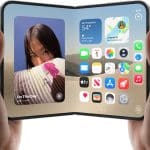
Apple’s long-awaited foldable iPhone may finally be taking shape behind the scenes. A new industry report indicates that Samsung Display has secured Apple’s approval to begin manufacturing foldable display modules, marking one of the strongest signs yet that the project is advancing toward production.
According to reports, Samsung achieved production yields exceeding 80% before receiving approval. The company has also started operating part of its production facilities in Vietnam to support an initial order estimated at around three million display panels. These developments suggest Apple is preparing for larger-scale production activities.

Production Progress Supports 2026 Expectations
Industry analysts have repeatedly pointed to late 2026 as the most likely launch window for Apple’s first foldable smartphone. While Apple has not confirmed any plans, the latest manufacturing milestone strengthens those predictions.
Apple maintains strict supplier requirements for quality, performance, and production stability. Therefore, Samsung’s approval indicates that Apple believes the company can manufacture foldable displays at the scale needed for a major product launch. However, display production represents only one stage of a much larger process that includes assembly, testing, and final device preparation.
As a result, some industry observers believe the device could debut alongside the iPhone 18 lineup, while others expect shipments later in the year.
Advanced Display Technology Could Set It Apart
The foldable iPhone is expected to feature several advanced display technologies. One of the most notable is Color Filter on Encapsulation (CoE) technology. This design replaces a traditional polarizer layer with a color filter applied directly to the display’s encapsulation layer. The approach can help reduce thickness while improving brightness and power efficiency.
Additionally, Samsung is expected to use its latest M16 OLED material set, which aims to improve brightness, color accuracy, lifespan, and energy efficiency. These improvements could help Apple overcome some of the common challenges associated with foldable devices, including durability, internal space limitations, and battery performance.
A Significant Step Toward Launch
Although Apple’s foldable iPhone remains officially unannounced, manufacturing activity continues to build momentum. Samsung’s reported approval does not guarantee a release date. Nevertheless, it provides clear evidence that Apple’s foldable smartphone project is progressing beyond speculation and moving closer to commercial production. If current timelines hold, consumers may finally see Apple’s first foldable device arrive sometime in late 2026.