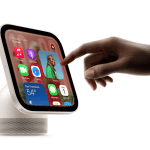
Apple’s upcoming HomeView smart home display is attracting attention as developers explore its operating system before launch.
The device will begin shipping on November 13, 2026. Meanwhile, early software testing has revealed several features and unexpected limitations.
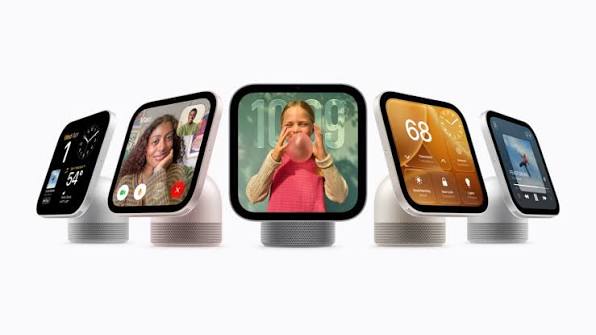
Developers Gui Rambo and Steve Troughton-Smith recently examined HomeView OS through virtual machines.
Their findings reveal how Apple plans to manage apps, security, and user interactions.
However, the operating system appears more restrictive than developers initially expected.
Liquid Glass and Familiar Settings
HomeView OS includes a Settings interface similar to those on iPhones and iPads.
Additionally, users can search settings and use swipe typing.
One notable discovery involves Apple’s Liquid Glass design.
A dedicated slider allows users to adjust the interface’s transparency and opacity.
Consequently, users can choose between a clearer appearance and stronger visual contrast.
Developers also identified BreadBoard, the system’s app launcher, and CupBoard, which manages Control Center.
Interestingly, HomeView OS runs on a modified version of tvOS 27.2, despite displaying an iOS version label during testing.
Face Recognition and AirPlay Support
HomeView includes authentication features designed to protect personal information.
Users can verify their identity through a nearby iPhone, iPad, or the device’s built-in camera.
Furthermore, the display can temporarily increase brightness when lighting conditions interfere with facial recognition.
If recognition fails, users can select their profile manually.
Meanwhile, AirPlay allows users to stream videos after entering a four-digit pairing code.
The system supports different video layouts, subtitles, playback speed controls, and audio track selection.
CarPlay Technology Creates Developer Challenges
Apple has adopted CarPlay technology to support selected HomeView applications.
Internally, the system refers to this implementation as PebblePlay.
However, developers must provide templates that determine how their applications appear on the display.
Currently, the system appears to support audio and video applications rather than navigation apps or ChatGPT.
Additionally, HomeView will not include an App Store or allow users to install third-party applications directly.
Although Troughton-Smith successfully launched a limited Broadcasts app, the experiment exposed the system’s restrictions.
He also questioned whether Apple’s CarPlay-based development approach offers enough flexibility.
Developers Await Apple’s Next Steps
HomeView OS remains an unusual combination of familiar Apple features and tightly controlled software.
While its authentication and streaming tools offer practical benefits, developers face significant limitations.
Moreover, separate application templates could increase development work.
Ultimately, Apple’s approach may simplify the user experience while limiting software expansion.
With HomeView’s November 13 launch approaching, developers will watch closely for improvements and additional capabilities.