TUAW redux: The future of iPhone OS and Mac OS
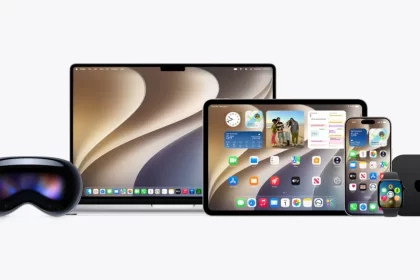
One of the big topics of discussion yesterday in our TUAW back channel was this post from the New York Times Bits blog. In "Why can't PCs work more like iPhones," Bilton pointed out that the iPhone has given Apple a chance to build a new OS from the ground up. This is a familiar viewpoint to us here on TUAW. Last year, I asked whether the future of the Mac OS would turn out to be the iPhone. In my write-up, I pointed out that the iPhone OS was built from scratch to work with Objective C 2.0 with its properties and other modern language features. Its API, far from being cobbled together, showed ever increasing design maturity without the weight of heavy backwards compatibility concerns. I concluded that Apple might take a lesson from the iPhone OS and consider offering a ground up redesign for Mac OS X, at least in terms of core OS principles.
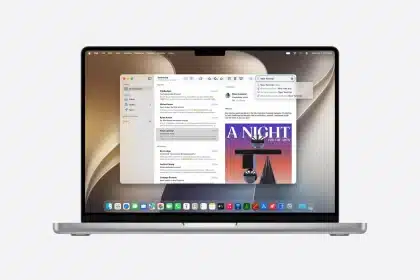
In his post, Bilton considers how Mac OS X might integrate iPhone OS features into its user experience, suggesting a possible Front Row-like overlay layer, running an iPhone OS interface. The goal would be to craft iPhone-style GUI simplicity onto the desktop experience, so that users could move seamlessly between their mobile and desktop worlds.
But as much as we believe that Apple is heading cautiously in the direction that Bilton suggests, the TUAW consensus is that a desktop OS needs far more structure and, at the same time, flexibility than what the iPhone OS offers.
Our own Brett Terpstra points out that the current interface standards of the iPhone won't translate easily to desktop use. Apple's accommodations for the needs and limitations of mobile users with limited time and physical device space drive a design standard that doesn't hold up for day to day work at the desktop, where the focus is on precision and efficiency over any portability concerns.
Apple's "one app" model is a big part of the mobile user experience that would have to be quickly jettisoned. While Apple's iWork integration, announced at January's special event, points at greater desktop/iPhone OS file system integration, the iPhone OS's one app at a time paradigm simply doesn't work for a multi-purpose, multi-tasking flexible desktop environment. And that's not the only big change that would need to be made. Consider the whole question of each mobile application's GUI needing to fit the device. Desktop users are more comfortable with flexible view sizes in a multi-windowed environment. Terpstra says, "It would take too many concessions to translate the current interface standards of the iPhone OS to desktop use."
That doesn't mean that the two platforms can't share libraries. Already, OS frameworks -- the precompiled libraries of routines that OS X developers on both platforms link to to gain access to Apple-supplied functionality -- are growing closer. Under the hood, iPhone OS and Mac OS are essentially running the same OS, although the specific implementation details differ by platform. But Terpstra maintains that there are intrinsic limitations in that arena as well. He writes, " I don't see the iPhone, Apple TV and OS X ever all sharing a full code base. It would overpower mobile devices and underpower desktops. No one would be happy." That's the consensus here at TUAW as well.
Share
One of the big topics of discussion yesterday in our TUAW back channel was this post from the New York Times Bits blog. In "Why can't PCs...
Add a Comment
I cannot believe you used the words modern language and Objective C in the same sentence. It baffles me to imagine how much more the App Store would be with a modern programming language. Apple has done an amazing job with a platform that has a very steep learning curve.
February 27 2010 at 12:26 PM Report abuse Permalink rate up rate down ReplyHow much more it could be? What is it missing? What exactly does the programming language...you know, the one used to make apps for Mac OS X...the frameworks upon which it is built, etc...
Steep learning curve? Have you looked at ObjC2.0?! The syntax is dead simple. The learning curve comes from the API...which is no more steep then AWT, Qt+, MFC or any other api.
At least this API makes sense most of the time :)
Oh wait...is this about...Java or the lack thereof or something? :)
Heheh.
-K
Making Mac OS X made like the iPhone OS would be a complete disaster! Leave it alone, it's practically perfect. I have no complaints.
February 27 2010 at 11:22 AM Report abuse Permalink rate up rate down Reply> Bilton pointed out that the iPhone has given Apple a chance to build a new OS from the ground up.
WRONG.
> I pointed out that the iPhone OS was built from scratch
WRONG.
> take a lesson from the iPhone OS and consider offering a ground up redesign for Mac OS X
WRONG.
iPhone OS and Mac OS X share over 80% of their source code (see WWDC'09 sessions). Mac OS X was based on work at NeXT on NeXTStep (where do you think all the NS* class names come from?). iPhone OS can trace it's heritage back to the NeXT days. There is very little there "from scratch" or "ground up". For iPhone OS 3.2 Apple is adding even more bits from it's OS X sibling in addition to creating new UI elements.
Apple has leveraged over 20 years of experience and knowledge to create iPhone OS. The only thing "new" is the user interface. The core OS is decades worth of maturity and stability. This is one of the cornerstones of the iPhone's success. Mature development tools (Xcode) and experienced developers (a Mac OS developer can pickup iPhone development in a matter of days) is the other.
Thank you Mona. That needed saying. I think the single reason the author thinks that Apple could "invent the iPhone OS from scratch" is that there is no file transferring between other smart phones.
If the Mac worked like the iPhone, with little to none of the work created on it being transferred to any other user (other than emails), then more people would have simply just bought a Mac and ditched their PC long before the switch to Intel. Pre-Intel Tiger was just as great an OS as Post-Intel, but look at the unit sales when Apple ditched PowerPC architecture.
To really start kicking off sales, Apple had to win over PC users (in a number of ways, but primarily) by saying "hey you can run Windows on us now (Intel switch) and MS Office is available for the Mac too".
In contrast, the iPhone doesn't share most anything with other smart phones so it is an island unto itself. iPhone customers don't care what type of OS their neighbour's phone runs, nor should they. This type of thinking is what has hobbled people into staying with Windows PC's when they hated them.
If Apple had entered the smartphone market where Nokia, Motorola etc were all trading a unified file type of some kind with apps that ran on only those devices, Apple would have had to alter their approach. I think this is why they had a bit of a cart blanch to design the iPhone OS UI and handling the way they wanted. Tens of thousands of apps later and they're now defining the industry standards the way Microsoft did with the PC. People now say they'd rather buy and iPhone because it runs so many different apps. Exactly what they use to say about buying a PC. Except the iPhone doesn't suck.
When a new version of OS X comes out it usually brings improvements and new features and I love that. The only thing that frustrates me with updates is loosing functionality I once had, but it's rare. What I hope that happens, is that tech moves closer to the iPhone OS model for simplicity for the average person, because they really, really do need it, but that the power of full OS X isn't taken away from us who do know how to use and leverage it. The risk in this is that if 90% of Apple's customer's are using the simplified tech, or simplified devices, what motivation will Apple have to update and grown the full version of OS X. My fear is, not much.
But despite my fears, as others have pointed out. The change is coming wether we technophiles like it or not. OS X is still too much of a hurdle for too many people. I've seen it too many times to discount it. The mouse, double click, right click, Menu Bar drop downs and the Finder are just too much for many people.
I don't want my Mac to become more like my iPhone. I want my iPhone to become more like my Mac.
February 27 2010 at 9:21 AM Report abuse Permalink rate up rate down ReplyExtrapolation into the future improves with more data points. We may have further insights after the iPad and its successors are more familiar to us.
As I see it, the future of operating systems can be described in a single word, "adaptive." The idea is that devices will adapt to users, uses and available resources and do so in a relatively seamless fashion. In this Brave New World, there will be less for end users to learn as the sophistication of their use grows.
The OS will have a core with modules being added and jettisoned as circumstances change. The Adaptive OS.
Frank,
the bank of cores is exactly why I keep saying we'll see A4s pop up in bigger machines. An intel CPU (for now) and several A4s handling different tasks is around the bend. There is no reason a well heeled cocoa app couldn't run on an A4, so why not? The foundation was put down with blocks and grand central. It's coming.
I think when we see the iPad we'll glimpse the beginning of the iPhone OS working in a bigger visual environment. Then the app community making their magic and we'll see how this begins to become the future of computing. Compare the first iPod to today's cumulative efforts into the iPhone. Then imagine the upcoming iPad to the iPad of five years from now, then...you begin to see the beginning of future computing.
I am not so sure that I am ready to concede that Mac OSX is so complicated that the average user is more suited to iPhone OS.
In 1984 my mother purchased an AT&T 6300 with Windows 3.11 along with Wordstar, Lotus 1-2-3 and dBase III thinking she would run the office for my father's manufacturer's rep agency.
After a few frustrating months she abandoned the machine in disgust. (I loved it, especially dBase III - my first scripting language.)
Every 5 years or so she would buy a new "IBM Clone" and take a stab at it only to banish it to the garage. She understood that the world was moving digital and wanted to be a part of it. She would even take classes at our local community college.
In 2008, at the age of 72, I convinced her to buy an 20" AL iMac and an AppleTV . She took to it like a duck to water. She understands Finder, tabbed browsing, multi-tasking, syncing her media, all the things that some are saying needs to go. But her old-style VHS deck still blinks 12:00. (I keep telling her to throw it away since she owns zero VHS cassettes.)
She now spends 4 - 5 hour a day on the computer. On her own she purchased MacGourmet, learned how to import recipes from Foodnetwork.com (and others), she has also scanned all of our family pictures. She loves her AppleTV so much she just purchased an iPod touch to take with her on out of state visits to family. To say she loves Apple's ecosystem is an understatement. For the Windows pundits who take jabs at Apple, they can't appreciate how beautifully all of Apple's products co-exist so they mock it.
Now I realize this is anecdotal evidence. I, like many of you, am the fix it guy for the family - friends - neighbors computers, I have rarely met anyone that fails to understand Finder or Windows explorer for that matter. The family members that I have given my Mac hand-me-downs to all swear by them and don't pine for an "OS for dummies".
She has invested a lot of time into this. If we were doing it right...she wouldnt have to have done so.
This is what is changing.
I think folks need to really look at some of the stuff people have managed to squeeze out of that phone...that tiny screen.
About the only things you cant do with it is actually program for it on itself.
iPhone apps touch almost every creative profession and many technical ones.
Why people think making the platform bigger, faster, even more flexible and more integrated within itself and beyond itself is...more...limiting is really strange to me.
-K
"invested a lot of time into this"
The only significant amount of time invested was with Windows, which she never grasped. OSX she grasped immediately. She has an iPhone OS device as well, but she would not have grasped it any faster than OSX.
For all the glorious features people attribute to iPhone OS, there are some counter intuitive features as well. Burying and nesting preferences and settings to programs in the "Settings" on iPhone is not obvious.
When playing "Vay", for example, why should I have to quit the game, find "Settings" scroll to the bottom, tap "Vay" scroll to the bottom, make a change, quit "Settings", go back to "Vay" and see if what I did was what I wanted to do.
Why people think their vision of the future is right is beyond me. Is it change for the sake of change?
One of the main issues that needs to be addressed is: on OS X you open the Finder and click on a file to run an application associated with it. but on the iPad, as far as I see, you open an application which then manages all the files associated with it.
This is a move, but only partway to finally getting rid of the Finder, folders, files etc, which are a hang-on from many, many years ago.
What we really need is to bring in the concept of a content Library. Allowing, for example, me to keep things classified by "Finance - Bank - Letter of 12-2-10 re loan terms" (a WP document) or "Finance - Wife - "Spending limits" (A spread sheet!)... and a cascading display of these from the menu bar similar to the one you get when you place the Document folder in the Dock.
My mother in law would understand that.
It seems to me there will always be a distinction between mouse/keyboard focused apps and touch apps, but I'd be shocked if touch apps didn't end up working as widgets on the desktop platform sooner rather than later, with some more fluid way to move between the two than we have now.
February 27 2010 at 1:16 AM Report abuse Permalink rate up rate down ReplyiPhone 4G pictures?
http://www.flickr.com/photos/45980390@N03/4391634606/
Probably not.
Hot Apps on TUAW
Deals of the Day
more deals- Verizon Leather Sleeve for Tablets for $4 + free shipping
- Wicked Jaw Breaker Noise-Isolating In-Ear Headphones for $6 + free shipping
- Refurb Apple MacBook Air Laptops: 12" 64GB SSD for $699 + free shipping
- JVC Motion Sensing Clock Radio with Dual iPod Docks for $55 + free shipping
- Apple iPhone Headset with Mic for $4 + $2 s&h
- Refurb Apple iPod nano 8GB MP3 Player for $99 + free shipping, 16GB for $119
Software Updates
more updates- EFI Firmware Update brings Lion Internet Recovery to 2010-model Macs
- OS X Lion 10.7.3 released with Safari 5.1.3, Wi-Fi bug fix
- Aperture updated to 3.2.2, addresses Photo Stream issue
- Apple updates Keynote to address Lion issues
- Google Search app gets new look on iPad
- Apple releases Apple TV Software Update 4.4.3


28 Comments