Apple has removed an iPhone advertisement in Milan after concerns emerged over its portrayal of a young child using the device. The billboard became the focus of criticism from Italy’s children’s rights watchdog.
The advertisement showed a toddler holding an iPhone covered with food. It also featured the Italian phrase “Tutto ok, è iPhone,” meaning “It’s okay, it’s an iPhone.”
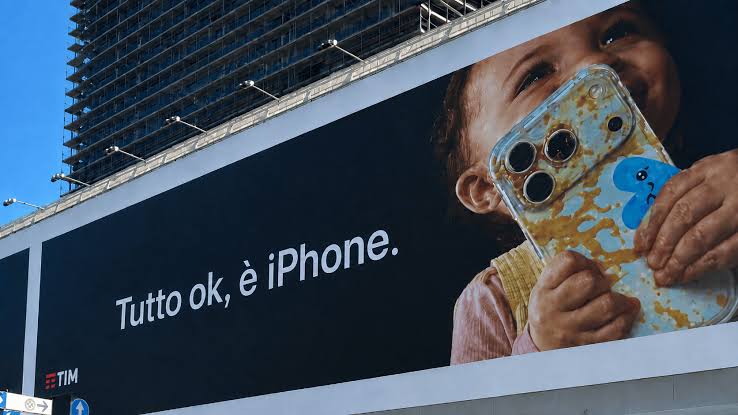
However, the playful image sparked a much more serious debate about children and technology.
Watchdog Raises Digital Addiction Concerns
Italy’s Authority for Children and Adolescents, known as AGIA, became involved after receiving a complaint from a concerned citizen. The complaint argued that the billboard could normalize “electronic babysitting,” where adults use devices to keep children occupied.
AGIA subsequently criticized the campaign. The organization argued that such messaging could encourage digital dependency and potentially affect children’s psychological and cognitive development.
Therefore, what Apple intended as a product-focused message quickly became part of a wider discussion about childhood screen exposure.
Apple Ad Focused on iPhone Durability
The billboard had a different purpose within Apple’s broader marketing campaign. It formed part of the company’s “Relax, it’s iPhone” advertising, which highlights iPhone durability rather than encouraging children to use smartphones.
Other advertisements placed iPhones in situations that might once have worried smartphone owners. For example, campaign images showed a phone in the rain, inside a dog’s mouth and near a bathtub.
The toddler image followed the same idea. A food-covered phone suggested that the device could withstand everyday accidents. Still, its use of a very young child created an unintended interpretation.
Apple Replaces the Milan Billboard
Despite the campaign’s original message, Apple responded to the controversy by removing the advertisement. The company then replaced it with another promotion highlighting the iPhone’s Find My capabilities.
The episode shows how quickly advertising can take on meanings beyond a brand’s original intention. For Apple, a simple durability message became a debate about technology, parenting and children’s digital habits.