Filed under: OS, Software, Cool tools, Productivity, Odds and ends
The Little Things: Infinitely large targets

The gist of Fitts's Law is that the time it takes to point to a target - in our case here, with your mouse or trackpad - is a function of the distance and size of the target. Bigger and closer targets are easier to hit.The beauty here is in how Apple has leveraged this concept with Mac OS X's UI, right down to the reason behind the menubar being pinned and always accessible at the top of your display. Basically speaking, there are five primary targets that are dead simple to hit, without even having to look at them: the four corners of your display and the menubar (and sure, the Dock could count as a sixth, but I'm leaving it out for now). You can easily just fling your mouse 'up' and hit the menu that governs the application you're working in (or any you can quickly switch to); it might seem like a minor detail, but it's one that makes it a lot easier to land on the menu you need and keep working.
The four corners of your display are even easier, according to Fitts' Law, since they are what John called 'infinitely large targets.' You can close your eyes and fling your mouse 'down and to the left' and know that you've hit the lower left corner of any display. Attach an action like invoking Dashboard or an Exposé view to those corners (accessible via the Dashboard and Exposé System Preferences pane) and you have just enabled a powerful way to access information and organize your windows. Tack on a 3rd party tool like MaxMenus, CornerClick (a download is available but their site is under renovation) or Spanner and you open up even more possibilities for using these incredibly easy targets to enhance the way you work.
Get a WordPress.com Blog
![TUAW [Cafepress]](http://www.blogsmithmedia.com/www.tuaw.com/media/tuaw-cafepress-promo.png)


Reader Comments (Page 1 of 1)
imcquill said 3:12PM on 5-11-2007
You can just use quicksilver to do this, and attach to the corners
anything that can be done in quicksilver. This is detailed here: http://imcquill.livejournal.com/3425.html
Reply
walkerjs said 3:42PM on 5-11-2007
I can't really use the top two corners, since I always hit them by accident when I head for the Apple menu or spotlight. Though I use virtuedesktops I have the upper left corner set to the desktop switcher and am always invoking it when I want to go to the Apple menu. Fortunately I don't use the Apple menu all that much.
The lower corners, however are great, and those are mapped Exposé All Windows and Desktop. I use those all the time.
Reply
ToupsWinker said 3:57PM on 5-11-2007
This always confused me as to how it works. This helps some.
Reply
Andrew said 4:01PM on 5-11-2007
Small clarification: Apple's made use of Fitt's Law in this way not just in OS X, but since the earliest Mac OS's, where the File/Edit/etc. menus are attached to the top of the screen. Contrast with Windows applications, where the File/Edit/etc. menus are in a thin strip below the app's title bar, and the app itself is likely floating on the desktop.
Reply
imcquill said 4:50PM on 5-11-2007
If you use the quicksilver solution, you can put a delay on the trigger, so it only launches if you've been sitting in the corner for x seconds. This helps for not accidently triggering with the top corners.
Reply
RG said 5:19PM on 5-11-2007
Except...when OS X is running on multiple displays. Then, finding the menu bar is sucky, and the alignment of screens can also be problematic. Basically, they have a ways to go here.
Reply
Chris Andrews said 2:12PM on 5-12-2007
Considering that Fitt's law is based upon how long it takes to arrive at the target, then I think you missed the fastest destination; the current cursor position.
Not moving the mouse at all, but just right (or I suppose with some mice using the third mouse button) click where you are brings up a context sensitive menu. This is surely the quickest implementation of Fitt's Law.
Reply
will said 5:31PM on 5-11-2007
You can easily just fling your mouse 'up' and hit the menu that governs the application you're working in
But this fails once you start working in a dual-monitor environment. In fact, it only works about 50% of the time. Which, from a usability perspective, is pretty bad.. (Or even less, like 33% of the time, if you start using 3 monitors, as more than one of the folks in my office does.)
That's one of the things I actually like better about windows (X-windows, and MS windows) -- having a menubar at the top of the current window. Where, to me, it's quicker and easier to get to since it's closer. I don't have problems being precise with my mouse movements, so I don't need the "hard to miss with large mouse movements" menubar; I'm much better served by the "located nearby" menubar. And I often wish this were an option in OSX, to have menubars on the windows, even if it's in addition to the menubar at the top. Not that I expect to ever see that happen though.
Reply
David said 6:27PM on 5-11-2007
whatever. keyboard shortcuts dominate.
Reply
Allister said 6:55PM on 5-11-2007
I'm tiring of the constant promotion of Fitt's Law. Arguably the Fitt's Law approach to UI design is better to that used in MS Windows but it is still far from ideal. To traverse from one corner of the screen to the opposite is quite a mouse movement on today's large screens, so requires a very conscious 'quick' movement to make it.
Chris Andrews has hit on the superior solution though. Acorn Computers' ARM powered computers of the late 80's and early 90's ran RISC OS and were supplied with a 3-button mouse. The middle button was dedicated to opening the application's main menu (i.e. the equivalent of what you see in the menu bar for any Mac app). Your mouse simply had to be over ANY window that belonged to the application and you could access the menu WITHOUT moving the mouse at all. That actually meets Fitt's Law more successfully than OS X as your cursor was highly likely to be over the app already (seeing as you were probably already using some of its GUI controls. Another major advantage of RISC OS was that 'switching' applications wasn't always necessary - if a GUI control was visible, it was operable even if the window containing it was not on top of the stack. OS X seems to mostly soak up a first click on any non-active (not-on-top) window (to the confusion of many!), but NOT CONSISTENTLY (creating yet more confusion).
Try this. Open iPhoto and then open a Finder window. With iPhoto active but the Finder window visible, try clicking on files in the Finder. If you click one, Finder comes to the front and the file is selected. Set Finder to list view and go back to iPhoto. Now click on one of the arrows to expand a folder. The folder expands but the Finder window is not activated. Finally, use the toolbar icon to switch to icon view. Finder becomes active but the view doesn't change. While in Finder, you can select a photo in iPhoto and it selects the photo and switches the app. But with a photo selected and Finder active, what happens if you press iPhoto's Edit button? iPhoto activates and nothing happens. How is this almost random behaviour conducive to productive multitasking?
Reply
mark said 8:27PM on 5-11-2007
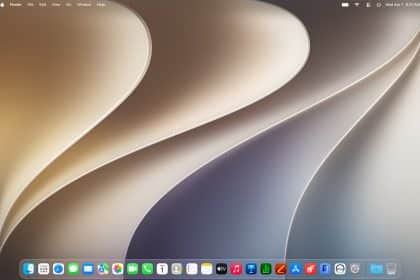
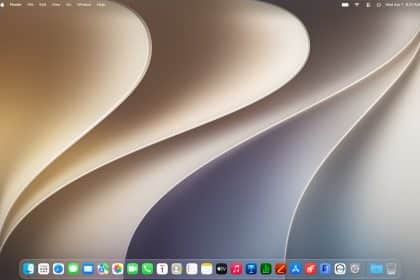
since this is all about productivity, i'm particularly curious about the screenshot that was posted with this article.
most mac users tend to place icons on the right side of their desktop, largely because that's where the hard drive icon is, and because other icons (downloads, mounted drives, etc.) also appear there.
so, considering fitts' laws, why would one choose the *left* side of the screen to reveal the desktop, only to have to then move the cursor back to the *right* side to access items on the desktop? that's not apple's default location for revealing the desktop (it's the lower right), so this was someone's conscious choice. :-)
hmm....
Reply
Andrew Burke said 3:07AM on 5-12-2007
Butler has excellent features for taking advantage of the screen corners. Since assigning the top left corner to closing the current app with a left click, and closing the current window with a right click -- I've never looked back.
Reply
ianpage said 9:37AM on 5-12-2007
Great to see MaxMenus get a mention here. This utility has been a godsend to me for over 5 years, and I use it dozens of times every day. In many instances it is far more convenient to use than the Finder. It puts a totally customisable menu in each corner of your monitor (in fact 3 different menus in each corner if you use optional modifier keys, for a total of 12 fully customisable meus). Each menu is fully heirarchical (or not - your choice) which means you can drill down to anywhere in your files in seconds.For example, I keep my Clients folder in the top left menu, which means I can open any file related to any client in less than 3 seconds WITHOUT SWITCHING OUT OF MY CURRENT APPLICATION! Simply brilliant - and much underrated. Should be high on most Mac users' list of tools. See proteron.com (with whom I have NO association - apart from being a big fan).
Reply
Patrick said 10:18AM on 5-12-2007
I agree with David. Keyboard shortcuts are all infinitely larger than any mouse movement because you can invoke just about any action instantaneously. Controlling the mouse is relative to where the cursor is located on the screen, and is just about always in a different position. The keys stay still, and between programs like keycue and quicksilver, productivity flies when you don't have to move the mouse around.
Need an example of this? Watch somebody who is a real professional at a very specific computer interfaced task, such as a Final Cut Pro editor. The program flies around doing thing faster than somebody watching can keep up with, because the mouse isn't telegraphing...
Reply
sjk said 5:33AM on 5-14-2007
#2 (walkerjs),
Which desktop switcher in VirtueDesktops are you invoking with a hot corner? Is it the "Show desktop overlap pager" that can be configured with a mouse trigger?
Reply
Charles Arthur said 12:16PM on 5-14-2007
If you'd stopped to think, you'd have realised that the corners are infinitely small. One pixel wrong and you're not in the corner, you're on the edge if you're trying to hit it first time.
The sides are pretty damn large. And so is the keyboard (for shortcuts). But the corners are almost impossible to hit, in my experience, without hitting something else first. Try going there: you'll hit the side of the screen first, almost for sure. It's much easier to hit the side- which is why I used to use ApplWindows [sic] on OS9. That was brilliant. Hit any side, and a menu of windows came up.
Reply