As remote work expands and cyber threats become more sophisticated, virtual private networks (VPNs) have moved from niche tools to essential infrastructure. Businesses now rely on VPNs to secure communications, protect sensitive data, and enable distributed teams to operate safely.
At the same time, a new category has gained popularity: browsers with built-in VPN functionality. Tools like Opera Browser and Brave offer integrated VPN features, promising convenience and instant protection without additional software.
But for businesses, convenience is only part of the equation. The real question is whether browser-level VPNs provide the same level of protection as standalone VPN solutions.
The answer lies in architecture.
How Browser VPNs Work
Protection Limited to the Browser Layer
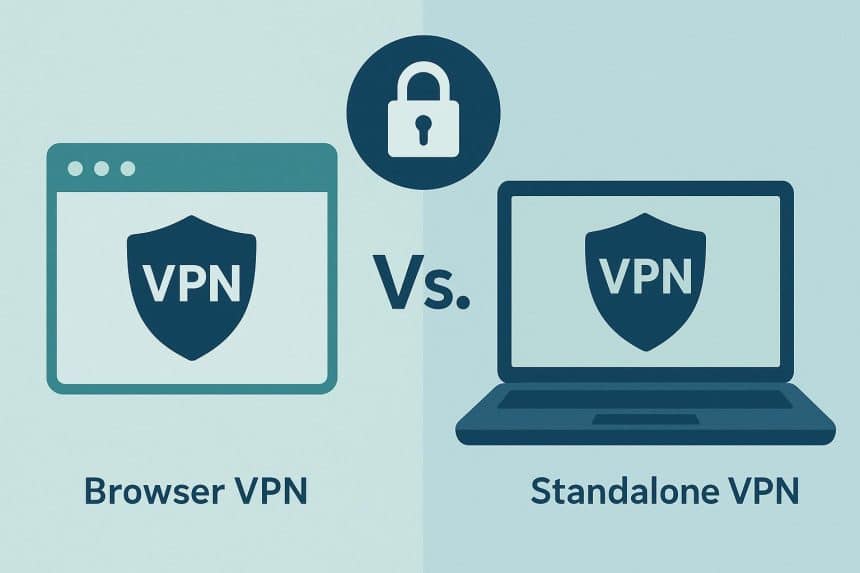
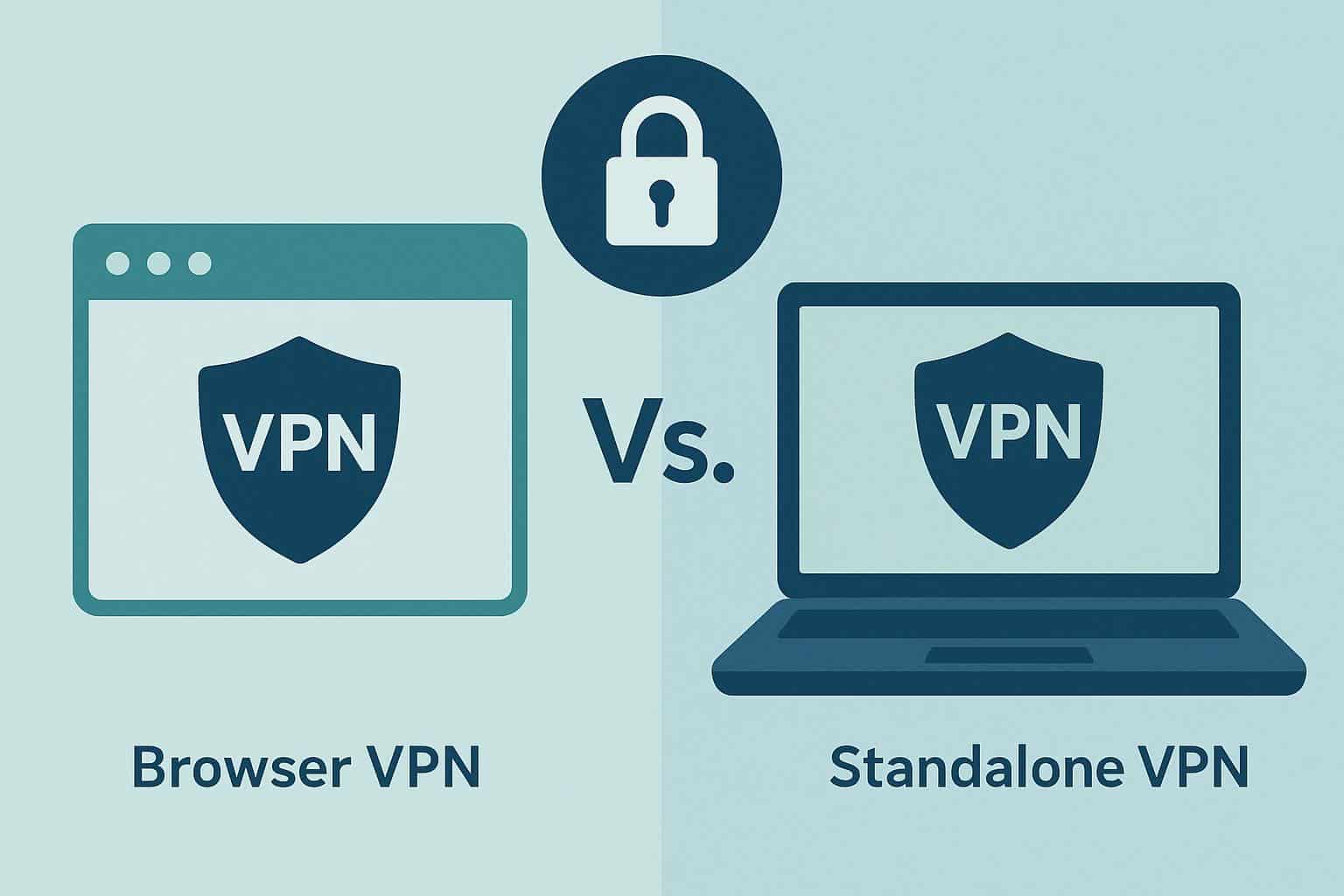
Browser VPNs operate within a narrow scope. When activated, they encrypt and route traffic generated inside the browser through a remote server, masking the user’s IP address and securing data in transit.
This protects activities such as web browsing, SaaS platform access, and online research. For individual users, this level of protection may be sufficient for everyday tasks.
However, the limitation is structural. Browser VPNs do not extend beyond the browser itself.
Applications running outside the browser email clients, file-sharing tools, messaging apps, and background services continue to transmit data through the regular network connection. This creates a split environment where some traffic is protected and some is not.
For businesses, that gap can be significant.
How Standalone VPNs Work
Full-System Encryption
Standalone VPNs operate at the device or network level. Once connected, all internet traffic from the device is routed through the encrypted tunnel.
This includes browsers, applications, cloud services, and system processes. The result is comprehensive coverage, where no data leaves the device unencrypted.
Standalone VPNs also offer more advanced features. These include kill switches that block traffic if the VPN connection drops, dedicated IP addresses, and centralized management tools for enterprise environments.
In effect, they create a secure perimeter around the entire device, not just a single application.
Security Gaps That Matter
Where Browser VPNs Fall Short
The difference between these two approaches becomes clear when examining real-world risks.
Browser VPNs protect against network-level threats within the browser, such as interception on public Wi-Fi. But they do not prevent data leakage from other applications.
For example, a remote employee using a browser VPN may securely access a cloud dashboard while simultaneously running an unprotected file transfer application. Sensitive data could still be exposed through that secondary channel.
There is also the issue of consistency. Security systems are only as strong as their weakest link. Partial encryption creates uneven protection, which attackers can exploit.
Standalone VPNs, by contrast, eliminate this inconsistency by securing all traffic equally.
Data Handling and Trust
Who Controls the Tunnel
Another key difference lies in data handling. Browser VPNs are often operated by the browser provider or third-party partners. Their primary business model may not be centered on privacy, raising questions about logging and data usage.
Standalone VPN providers, particularly those focused on enterprise clients, typically offer clearer policies around data handling, logging, and compliance.
For businesses operating under regulatory frameworks, such as GDPR or industry-specific standards this distinction is critical. Data governance extends beyond encryption to include how data is processed and stored.
Performance and Scalability
Convenience vs Control
Browser VPNs are designed for ease of use. They require minimal setup and integrate seamlessly into the browsing experience. This makes them attractive for individual users or small teams with basic needs.
However, scalability is limited. Businesses cannot easily manage multiple users, enforce policies, or monitor usage across a browser-based solution.
Standalone VPNs are built with scalability in mind. They support centralized management, user authentication, and integration with corporate security systems.
Performance can also differ. Browser VPNs often rely on a smaller network of servers, which may lead to slower speeds under heavy load. Standalone VPN providers typically offer broader infrastructure, allowing for better load balancing and performance optimization.
Enterprise Use Cases
Matching Tools to Needs
The choice between browser and standalone VPNs depends on the use case.
Browser VPNs are well-suited for low-risk scenarios. These include ad verification, accessing geo-restricted content, or conducting basic research without exposing location data.
For core business operations, standalone VPNs are the standard. They are used to secure remote access to internal systems, protect sensitive communications, and ensure compliance with security policies.
In many organizations, the two tools coexist. Browser VPNs provide convenience for specific tasks, while standalone VPNs handle mission-critical security.
The Bigger Picture: Beyond VPNs
Security Is Multi-Layered
It is also important to recognize that VPNs address only one aspect of cybersecurity. They protect data in transit but do not prevent phishing, malware, or account compromise.
This is why businesses increasingly combine VPNs with other tools, such as endpoint protection, identity management systems, and secure browsing environments.
For example, some teams use solutions such as antidetect browser Gologin to create isolated browser profiles when performing operations involving sensitive information. While this isn’t exactly a browser with a built-in VPN, this approach complements network security measures by reducing the risks associated with transferring data between accounts and improving operational control.
The trend is clear. Security is no longer just a standalone tool. It’s an entire ecosystem.
The Bottom Line
- Browser VPNs and standalone VPNs serve different purposes, even though they appear similar on the surface.
- Browser VPNs offer convenience and basic protection for web traffic. They are easy to use but limited in scope.
- Standalone VPNs provide comprehensive security, covering all device traffic and supporting enterprise-level requirements.
- For businesses, the distinction is not academic. It directly affects risk exposure, compliance, and operational resilience.
In 2026, relying on partial protection is rarely sufficient. The organizations that stay secure are those that understand their tools and deploy them where they matter most.