Continuity: Executive succession plans in history
We all know that Steve Jobs will eventually leave Apple, and Apple's executive team has a responsibility to draft a succession plan to help minimize the turmoil when that day comes. To figure out what Apple might do, we can look to the past for other examples.
Ford Motor Company was founded in 1903 by Henry Ford. In 1918, at the age of 55, Henry handed the presidency of the company to his son Edsel. When Edsel died in 1943, Henry came back to Ford Motor Company ill, "mentally inconsistent, suspicious, and generally no longer fit" for the job.
Most of the board didn't want him to be president. Even with no official title, he'd been in de facto control of the company since Edsel took over. Nevertheless, the board elected him (rather than cross him), and he served until the end of the second World War. Gravely ill, he turned control of the company over to his grandson, Henry Ford II, in 1945. Henry Ford died two years later.
Steve Jobs has four children, the oldest of whom is Lisa Brennan-Jobs, a 30-year-old journalist. None have publicly expressed any desire to run Apple.
Maybe a look into Apple's past is a lesson in itself. When Jobs was forced to leave Apple in 1985, he was relieved by John Sculley, who had most recently been CEO of PepsiCo. (Michael Spindler was next, hired from inside Apple Europe to lead the company worldwide.) Gil Amelio, another past CEO, was hired away from National Semiconductor, and proceeded to lay off a third of Apple's workforce.
Should Apple now look to another company for its next CEO? Many companies have found new CEOs from outside their walls, with varying degrees of success. Carly Fiorina, famously, was hired by HP from Lucent, and she became a reviled figure among HP's employees for her brash management style -- and for allegedly spying on other board members. On the other hand, there's Lee Iacocca, who is credited with reviving the Chrysler brand in the 1980s after being fired by Henry Ford II. Iacocca introduced the world to the minivan, and bought AMC to revitalize the Jeep brand in the early 90s.
Perhaps more relevant, and more recent, is the story of sometimes-foe Microsoft, and its founder Bill Gates. Gates stepped down from his role as CEO in 2000, but was (and is) still chairman of Microsoft's board of directors. He handed the CEO spot to Steve Ballmer, and split his duties among Ballmer, chief software architect Ray Ozzie and chief strategy officer Craig Mundie. Gates' strategy? Promote from within.
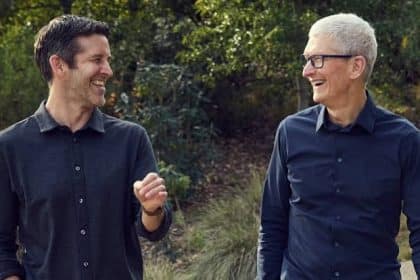
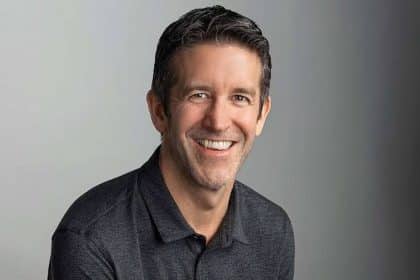
We may be seeing hints of a succession plan like this already at Apple. No one person could probably replace Steve Jobs, so instead a (insert painful swallow here) Microsoft-style approach might be forthcoming. The title of CEO, in theory, could go to Tim Cook, currently in charge of Apple as Jobs takes his leave of absence. Any of Apple's senior vice presidents, including Jonathan Ive and Phil Schiller, could have Jobs' responsibilities split among them. The big question is: Who is the strongest leader among these Apple veterans?
Let us know what your succession plan would be by leaving us a comment.
Share
Source: http://www.apple.com/pr/bios/
Categories
We all know that Steve Jobs will eventually leave Apple, and Apple's executive team has a responsibility to draft a succession plan to help...
Add a Comment
You go outside the company for a CEO when there are problems in the company and things need to be shaken up. This was the case with Sculley and Amelio, though obviously those cases didn't work out so well.
Things are going well at Apple, so no need to go outside the company. My betting is on Tim Cook. He's smart enough to realize that he needs to let his designers come up with innovative products and stay out of the way. He's also an operational genius and he has Steve's trust given his 2 shots at running the whole show while Steve has had medical issues.
I'd trust Ive's style and design choices the most. He's proven himself with amazingly well-designed products. Whoever the next leader is needs to remember what sets Apple apart from other computer manufacturers. It was imitation of the PC companies that caused the late 80s-early 90s downfall of Apple.
January 15 2009 at 12:32 PM Report abuse Permalink rate up rate down ReplyWhy do you (and others) read this as being about Jobs being dead, or almost dead? Nobody said he was dead or dying. It's like you're assuming that he holds the CEO role until death. King Jobs.
This article is speculation on what will happen when Apple has to replace Jobs as CEO. There are a number of reasons why a CEO might need to be replaced, and death is only one of them. Another one is resignation.
So, to paraphrase you, he doesn't have to be dead to resign as CEO. Keep saying that to yourself over and over so it will sink in. Steve Jobs does not actually have to be dead to resign.
I don't know, but guys, let's be reasonable, I consider the chance of one of Steve's kids taking over to be very low. After all, Apple is a company, not a kingdom (at least legally) :-)
January 15 2009 at 12:08 PM Report abuse Permalink rate up rate down ReplyThe discussion about what Apple shoud do when Jobs leaves the company is a valid discussion. Is he leaving right now? No, all signs point to not a chance. However, to stick your head in the sand and say nothing is wrong is equally disturbing and ignorant.
Will Apple hire one of Steve's children, as Jeremy said, it is very much last century. However, I do think that they have the people in place to move forward when Steve does step down.
I just honestly think that this time isn't going to be Steve's last hurrah. That said, this will be a good dry run to see how the company does without Jobs at the helm.
For the succession comments, I would suggest everyone take a close look at Scott Forstall's partial keynote presentations online. He introduced some parts of Leopard, then the iPhone SDK. The charisma is there. The confidence is there. The smirk is there.
January 15 2009 at 11:27 AM Report abuse Permalink rate up rate down ReplyWhile I hate to speculate that a 6-month leave of absence is the beginning of the end for Steve Jobs, there's no question that he won't be around forever. What does it hurt to speculate?
We need someone dynamic and techie who also has a love for Apple. Any ideas? Obama fits two of those three, but I don't think he is an Apple lover :-)
Apple *should* promote from within, whereas MS should have brought-in a few outsiders.
January 15 2009 at 10:09 AM Report abuse Permalink rate up rate down ReplyWhat? You don't like Steve Ballmer? Maybe Apple could persuade him to take over.
(I'm off to throw up now)
I'd argue that Apple doesn't need a CEO in the traditional sense of running the business, but rather more of a Chief Strategist to continue innovation and serve as the public face for the company. That in fact is the role that Jobs has been doing since his return and it's where his absence will be felt. Someone to foster new ideas, present them to the masses and generally push the envelope. Apple has more than enough people to handle the day-to-day business side of things that a traditional CEO does.
January 15 2009 at 10:05 AM Report abuse Permalink rate up rate down ReplyWell....
Of course you guys got a point there....
I rest my case, your Honour.
...
(but still :-p)
Hot Apps on TUAW
Deals of the Day
more deals- Refurb Apple MacBook Air Laptops: 12" 64GB SSD for $699 + free shipping
- JVC Motion Sensing Clock Radio with Dual iPod Docks for $55 + free shipping
- Apple iPhone Headset with Mic for $4 + $2 s&h
- miFrame Picture Frame Dock for iPad for $64 + $8 s&h
- Refurb Apple iPod nano 8GB MP3 Player for $99 + free shipping, 16GB for $119
- Hannspree Apple-Shaped 28" 1080p LCD HDTV for $270 + free shipping
Software Updates
more updates- EFI Firmware Update brings Lion Internet Recovery to 2010-model Macs
- OS X Lion 10.7.3 released with Safari 5.1.3, Wi-Fi bug fix
- Aperture updated to 3.2.2, addresses Photo Stream issue
- Apple updates Keynote to address Lion issues
- Google Search app gets new look on iPad
- Apple releases Apple TV Software Update 4.4.3


22 Comments