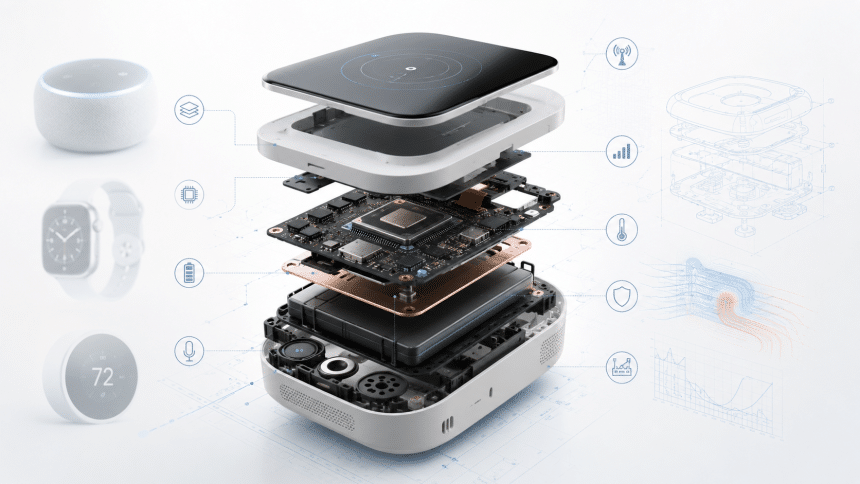
We tend to judge gadgets by their surface — the sleek finish, the responsive screen, the app that pairs in seconds. But every smart device that feels effortless is hiding a remarkable amount of engineering underneath. The reason your fitness tracker survives a workout, your smart speaker hears you across the room, and your thermostat runs for months on a single charge isn’t luck. It’s hardware engineering, working invisibly.
For anyone who loves technology, understanding what happens beneath the casing changes how you see your devices. It explains why some gadgets feel premium and others feel flimsy, why battery life varies so wildly between similar products, and why the gap between a clever prototype and a shippable product is so brutally wide. Let’s go behind the gadget.
From Idea to Object: What Hardware Engineering Actually Covers
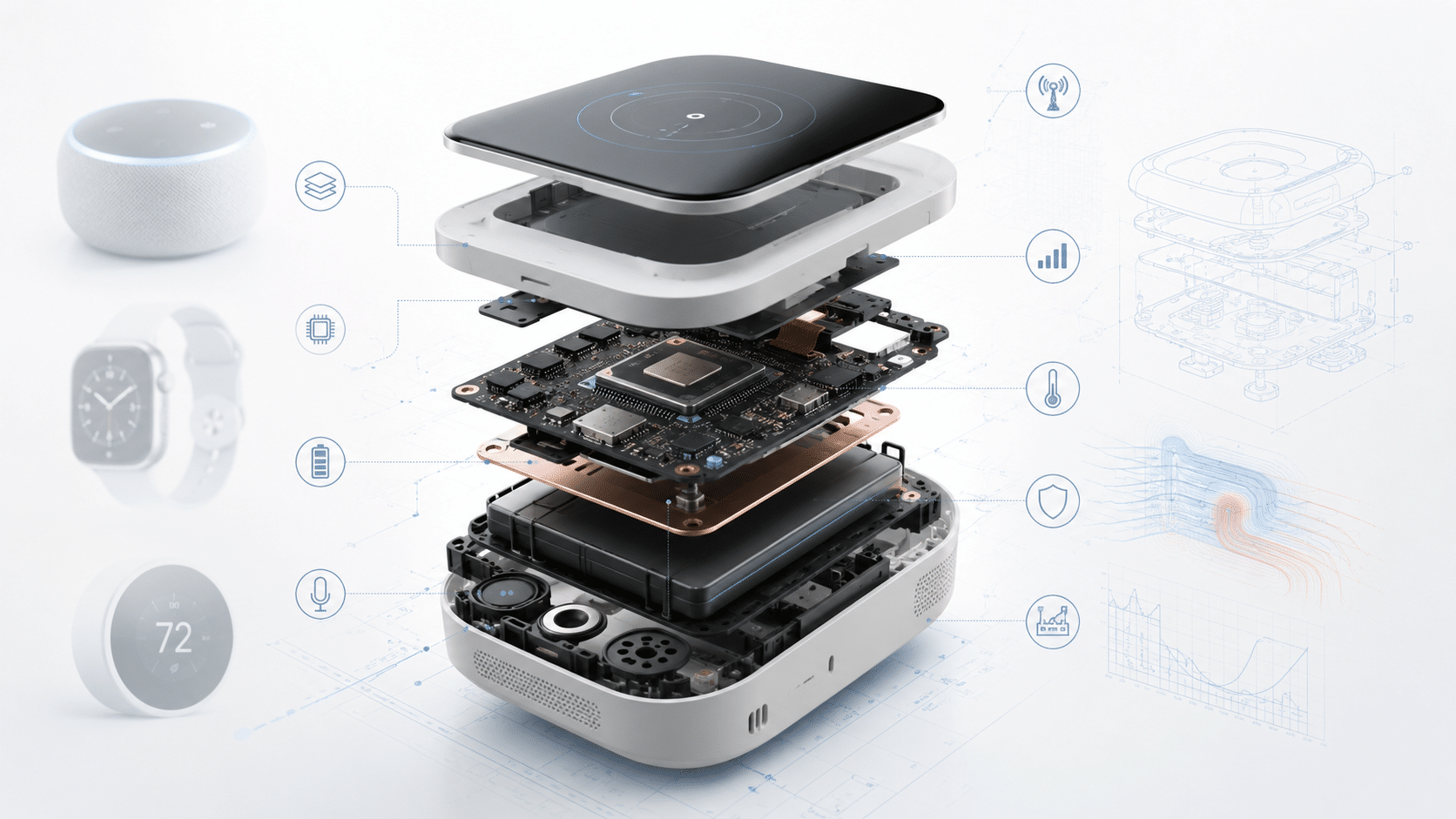
Software can be rewritten overnight. Hardware can’t — once a device is manufactured, its physical design is locked in. That permanence makes hardware engineering a discipline of careful, upfront decisions, spanning far more than most people realize:
- Electronics design — the circuit boards, chips, and power systems that bring the device to life
- Mechanical engineering — the enclosure, structure, and how everything physically fits together
- Sensor integration — the components that let a device perceive motion, sound, light, or temperature
- Power management — squeezing useful battery life out of a tiny cell
- Thermal design — keeping the device cool enough to work and comfortable to hold
- Manufacturing readiness — making sure the design can actually be built at scale, affordably
Every smart gadget is a negotiation between these forces. A bigger battery means a heavier device. A faster chip generates more heat. A slimmer enclosure leaves less room for everything. Great hardware engineering is the art of balancing these trade-offs so gracefully that you never notice they were made.
The Trade-Offs Hiding Inside Every Device
The next time you compare two similar gadgets, the differences usually come down to how their engineers resolved a handful of fundamental tensions:
| Trade-off | The Tension | What You Notice as a User |
|---|---|---|
| Size vs. battery | Smaller device, smaller battery | How often you charge it |
| Performance vs. heat | Faster chips run hotter | Whether it gets warm in use |
| Cost vs. materials | Premium materials cost more | How it feels in your hand |
| Features vs. reliability | More components, more failure points | How long it lasts |
| Thinness vs. durability | Slimmer means more fragile | Whether it survives a drop |
There’s no universally “correct” answer to any of these. A rugged outdoor device makes different choices than an ultra-thin wearable. What separates a great product from a mediocre one is whether those choices were made deliberately, with the end user in mind.
Why “It Works on the Prototype” Means Almost Nothing
One of the least understood truths in consumer tech is how enormous the leap is from a working prototype to a product on a shelf. A prototype only has to work once, on a bench, in ideal conditions. A shipping product has to work thousands of times, in pockets and kitchens and car dashboards, across a range of temperatures, for years.
Bridging that gap is where much of the real hardware engineering happens. Rigorous hardware engineering accounts for the messy realities that a prototype conveniently ignores:
- Manufacturing variation — no two components are perfectly identical, and the design must tolerate that.
- Environmental stress — heat, cold, humidity, drops, and dust all attack a device in the wild.
- Component sourcing — the perfect chip is useless if it can’t be bought in the volumes needed.
- Certification — devices must pass safety, wireless, and regulatory testing before they can be sold.
- Cost at scale — a design that’s affordable at ten units may be ruinous at a hundred thousand.
This is why so many crowdfunded gadgets miss their ship dates by a year or more. The prototype was the easy part. Turning it into something manufacturable, reliable, and affordable is the mountain. Teams that follow a structured hardware development guide navigate that climb far more predictably than those improvising as they go.
The Sensors That Give Gadgets Their Senses
If there’s one area where hardware engineering feels almost magical, it’s sensing. Modern smart devices are packed with tiny components that translate the physical world into data:
- Accelerometers and gyroscopes track motion and orientation — the reason your phone knows when you’ve turned it sideways.
- Optical sensors measure light, and in wearables, read your heart rate through your skin.
- Microphones and audio arrays don’t just hear sound but locate its direction, letting a speaker pick your voice out of background noise.
- Temperature and environmental sensors monitor everything from body heat to air quality.
The engineering challenge isn’t just adding these sensors — it’s making them accurate. Raw sensor data is noisy and imperfect. Turning a jittery signal into a reliable heart-rate reading or a confident “hey, I heard you” takes careful hardware design working hand in hand with clever signal processing.
What Separates Great Hardware From Forgettable Hardware
If you want to spot genuinely well-engineered gadgets, a few signals give it away:
- Battery life that matches the promise — a sign of disciplined power management, not marketing optimism.
- Consistent performance — no slowdowns or overheating under normal use, reflecting solid thermal design.
- Build quality you can feel — tight tolerances, no creaks, buttons with satisfying feedback.
- Reliable sensors — readings you can trust, every time.
- Longevity — a device that still works well two or three years in.
None of these are accidents. Each one traces back to engineering decisions made long before the product reached a store.
The Craft Behind the Convenience
The best hardware engineering is the kind you never think about. When a gadget simply works — charges when expected, responds when you speak, survives being dropped, lasts through the day — that seamlessness is the product of countless invisible decisions about power, heat, materials, and manufacturing.
So the next time a smart device impresses you with how effortless it feels, remember that the effortlessness is the illusion. Behind it is a team of engineers who wrestled with trade-offs, sweated over sensor accuracy, and fought the long battle from prototype to production line. The magic isn’t that the gadget is simple. It’s that so much complexity was engineered into feeling that way.