Choosing between native and cross-platform development can shape far more than your initial development budget. It affects how quickly you launch, how easily you maintain the product, and how efficiently your team can introduce new features as the app grows.
The right approach depends on the product itself. Just as importantly, businesses need a development partner capable of evaluating those requirements rather than recommending a technology simply because it is their default stack. An experienced Flutter app development agency should help determine whether cross-platform development actually fits the product before deciding how to build it.
When Native Development Makes Sense
Native development means building separate applications for iOS and Android using platform-specific technologies. It can be the right choice when an application depends heavily on operating-system-specific functionality, requires particularly complex hardware integrations, or has technical requirements better served by direct access to native APIs.
The trade-off is additional development effort. Two implementations can mean more engineering, testing, maintenance, and coordination, particularly as the product evolves.
When Cross-Platform Development Is the Better Fit
Cross-platform frameworks such as Flutter allow teams to share much of the application code across iOS and Android while still integrating platform-specific functionality where necessary.
For many startups and established businesses, this creates a practical balance between product quality and development efficiency. Teams can launch an MVP faster, keep functionality aligned across platforms, and introduce updates without maintaining two largely independent development workflows.
Flutter also provides extensive control over UI, making it suitable for products where a consistent, highly customized brand experience matters.
Choose the Partner Before the Framework
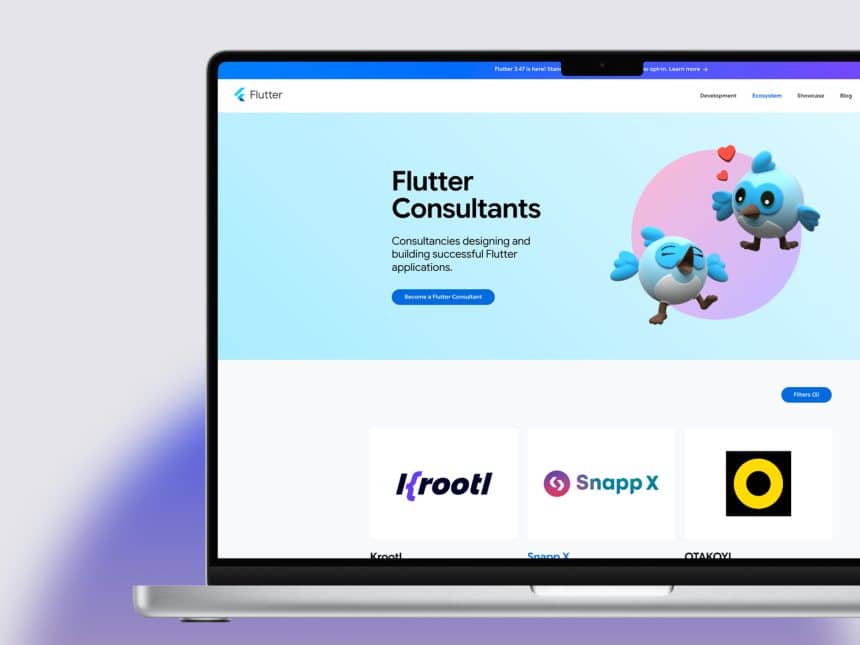
The technology decision should follow the product strategy, not the other way around. When evaluating a Flutter development partner, businesses can also look at the official Flutter Consultants Directory, which features vetted consultancies with demonstrated Flutter experience.
A strong development partner should evaluate your target users, required integrations, performance expectations, budget, launch timeline, and long-term roadmap before recommending native or cross-platform development.
The best choice is therefore not universally Flutter or native. It is the approach that provides the right balance of performance, speed, flexibility, and maintainability for the specific product you are building.