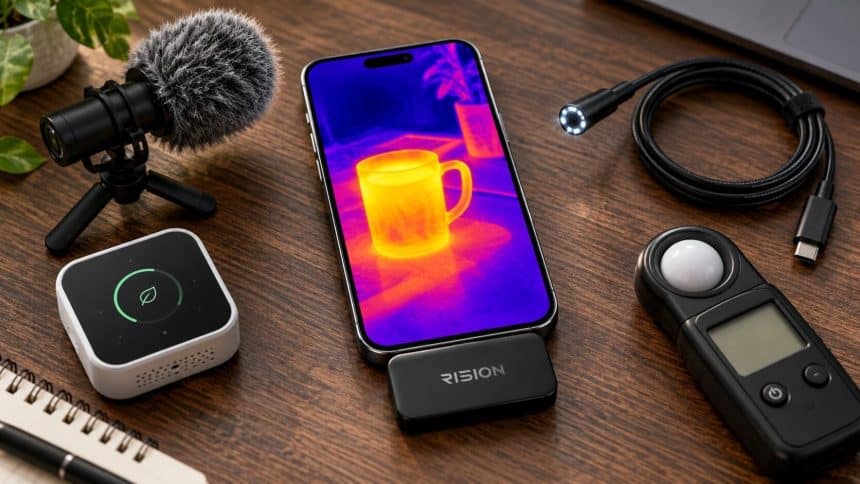
An iPhone can track location, motion, direction, and sound. Other measurements still need extra hardware. The added sensor gathers the data. The phone supplies the screen, controls, storage, and app.
The best accessory depends on the question you need to answer. These five categories show how far the iPhone can move beyond ordinary photos.
1. Thermal Cameras Show Surface-Temperature Patterns
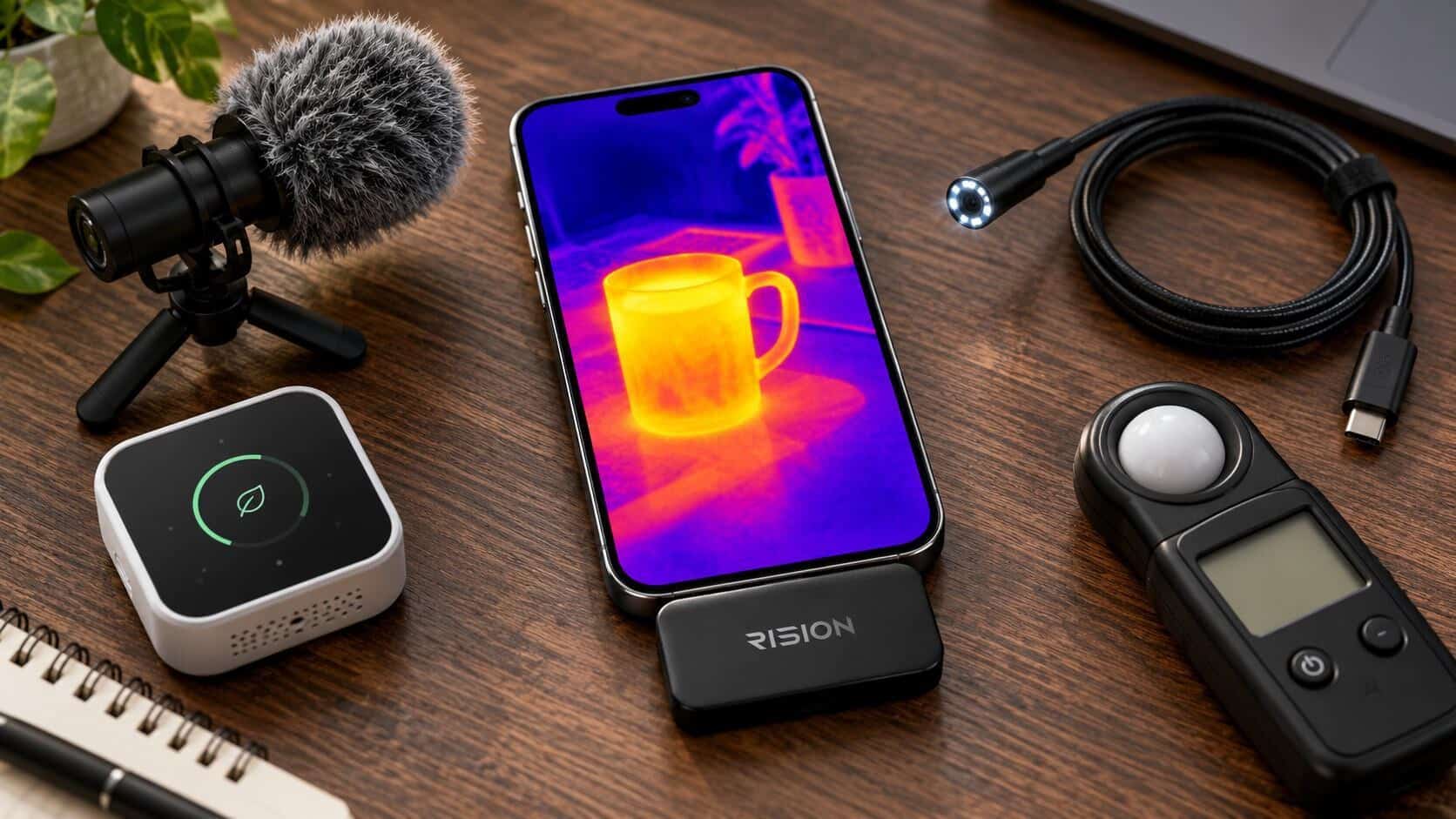
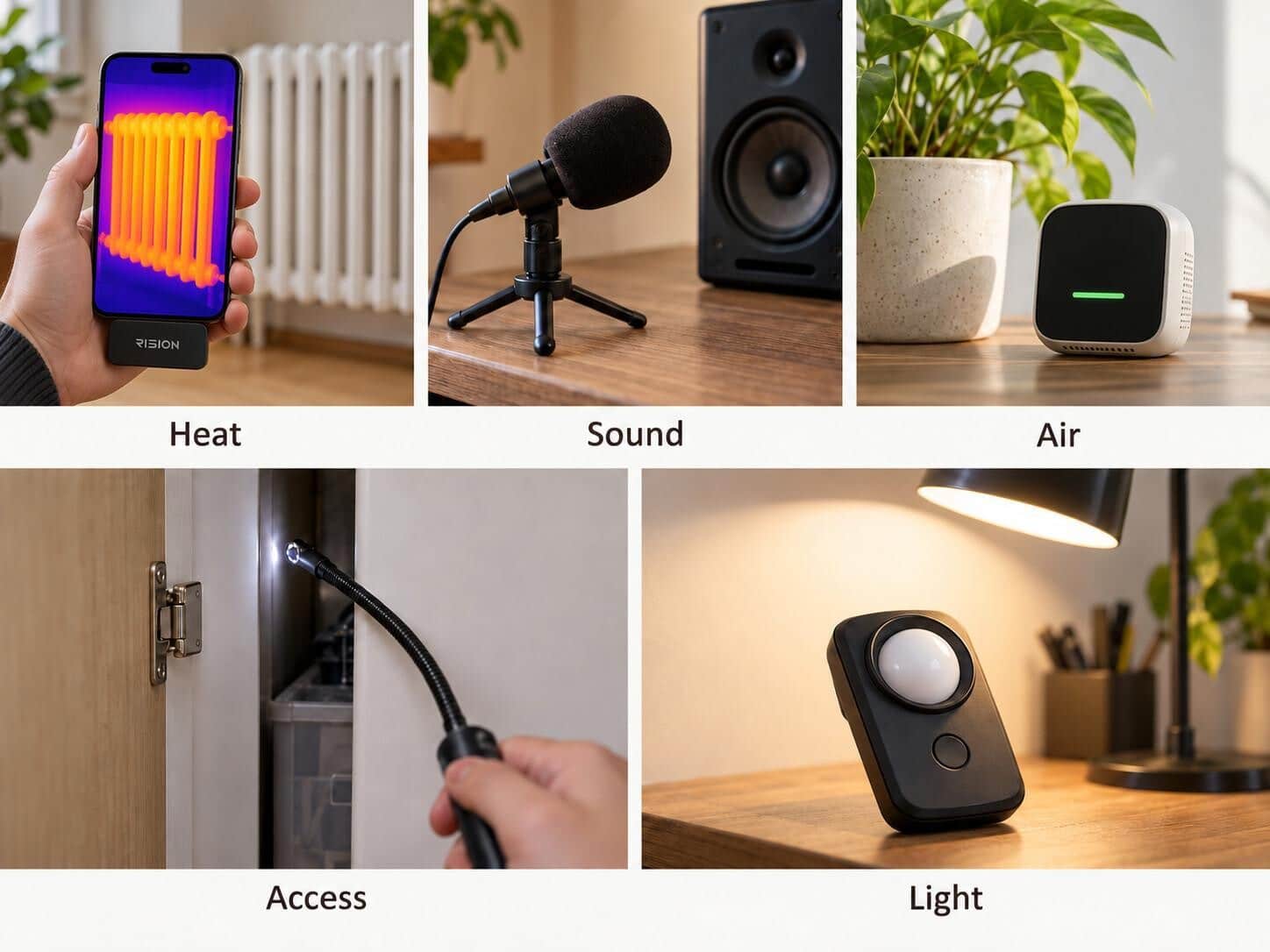
A thermal camera detects infrared energy. It maps heat across the surface in view. You can use it to check vents, electronics, windows, doors, and car parts.
When considering the Rision Thermal camera for Smartphone or another plug-in model, check which iPhones and iOS versions it supports. Review the app controls, heat range, case clearance, and export options too. RISION’s AI dual-light fusion pairs thermal data with visible detail from the iPhone camera, helping you place a heat pattern on a recognizable surface. The image still does not see through walls or name a failed part.
This is the difference between adding a useful measurement tool and collecting another gadget. A sensor earns its place when it changes a decision: which vent to inspect, whether a charger behaves differently under load, or what information to bring to a technician.
2. External Microphones Capture More Focused Sound
A directional microphone can focus on a speaker in a noisy place. A wireless lapel mic lets the speaker move away from the phone. A stereo mic can capture a wider sound field for music or sounds in nature.
Check whether the microphone needs its own power, supports monitoring, and works with the recording app and format you plan to use.
3. Air-Quality Sensors Add Environmental Data
An air-quality sensor may track fine particles, carbon dioxide, humidity, temperature, or gases from household products. The exact list depends on the device. These readings can help you compare rooms or see what changes during cooking and ventilation.
Placement, airflow, calibration, and warm-up time affect the readings. A general air-quality score is less useful when the manufacturer does not explain which measurements contribute to it.
4. Inspection Cameras Reach Tight Spaces
An inspection camera puts a tiny camera on a bendable cable. It can look behind an appliance, under a car part, inside an open wall hole, or down a drain.
Check the probe width, cable length, focus distance, light control, and water rating. Never push the probe into live electrical gear, a moving machine, or a space where it may get stuck.
5. Light Meters Help Evaluate Illumination
A light meter can compare a desk, studio, indoor growing area, or room at different times of day. It measures light directly instead of asking the phone camera to judge brightness from a photo.
A consumer meter may be fine for basic checks. It may not meet the rules for work, legal, or safety tests. Those jobs can require a calibrated meter that follows a set standard.
Use One Compatibility Checklist for Every Sensor
A USB-C plug does not mean an accessory works with every iPhone. Check the supported models, iOS version, app, case clearance, power source, exports, calibration needs, and recent app updates.
Some accessories draw power from the phone, while others use their own battery or receiver. App quality matters too. Strong hardware becomes frustrating if its app loses readings or no longer receives updates.
Choose the Measurement Before the Accessory
Start with the decision you need to make. Do you want to compare surface temperatures, improve an interview recording, observe indoor air, inspect a tight space, or measure light? That question determines which sensor, controls, and export features matter.
External sensors can turn an iPhone into a compact measurement kit. The phone makes the tool convenient, but the sensor quality, app, and testing method determine whether the result is useful.